De Orbitis Planetarum
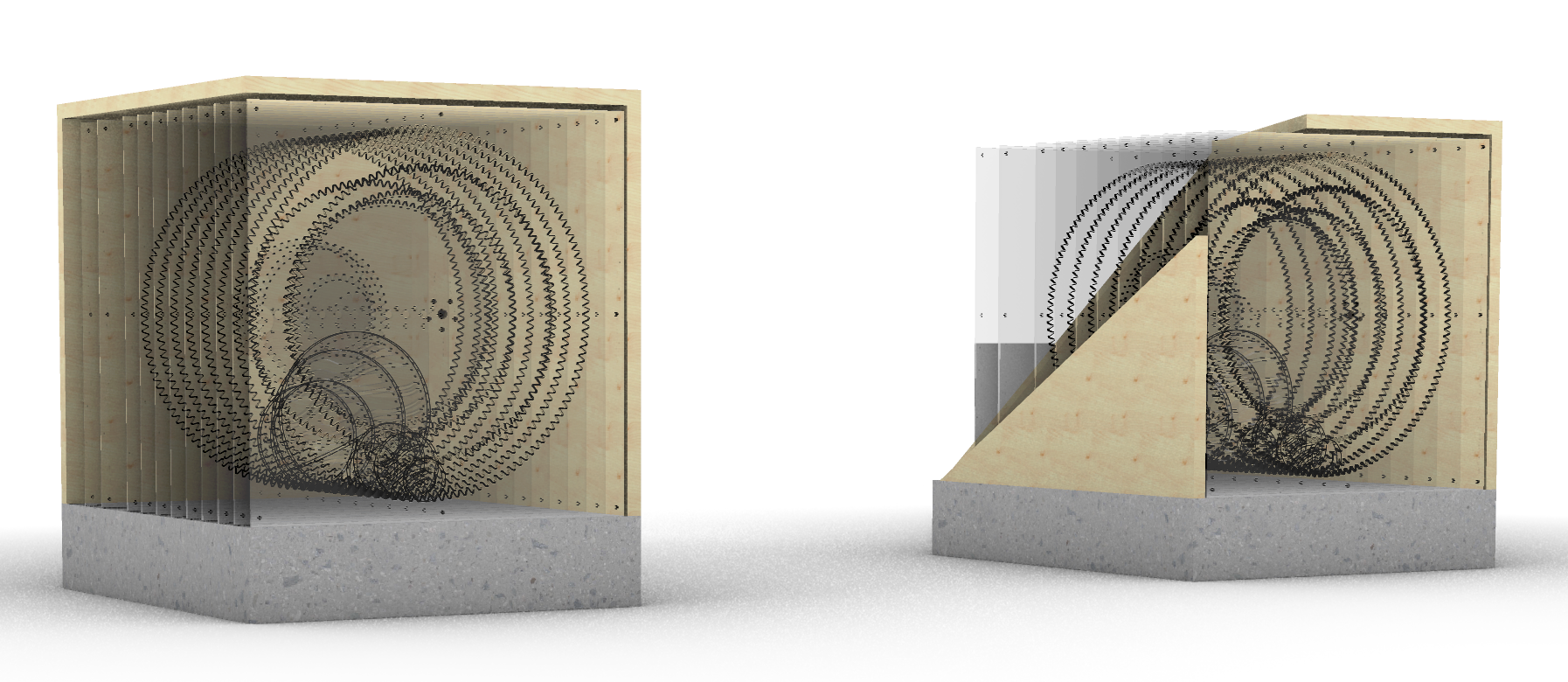
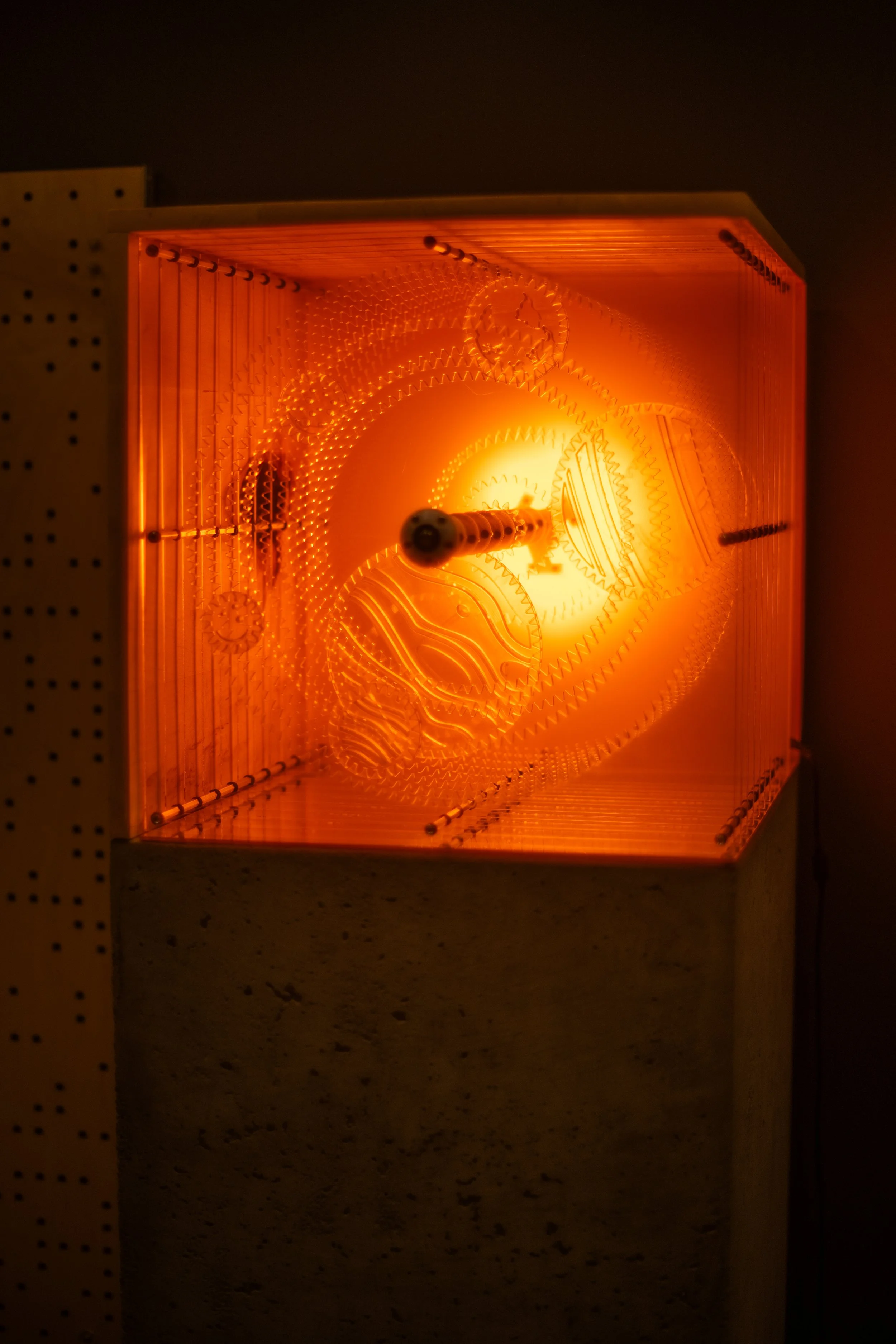
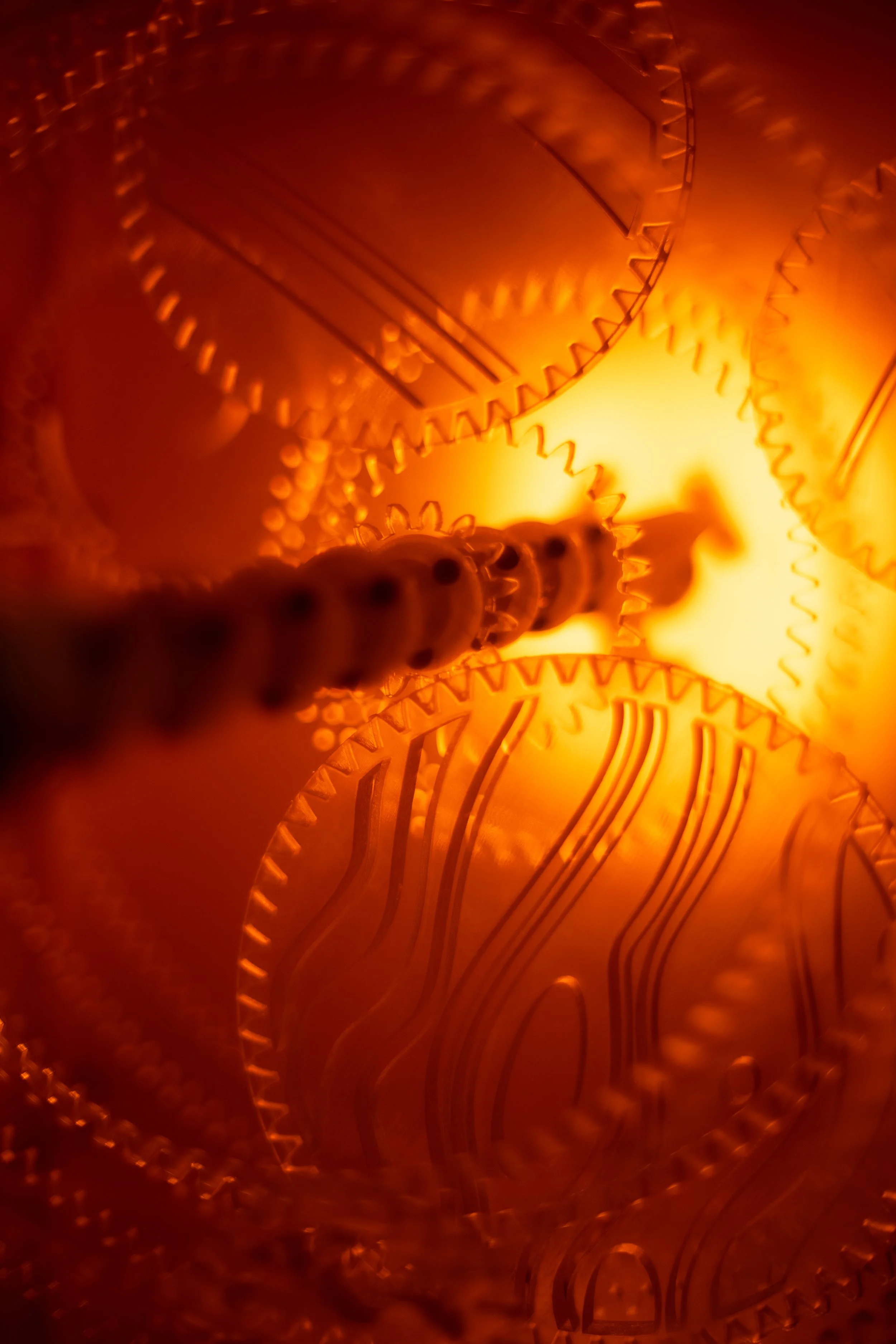
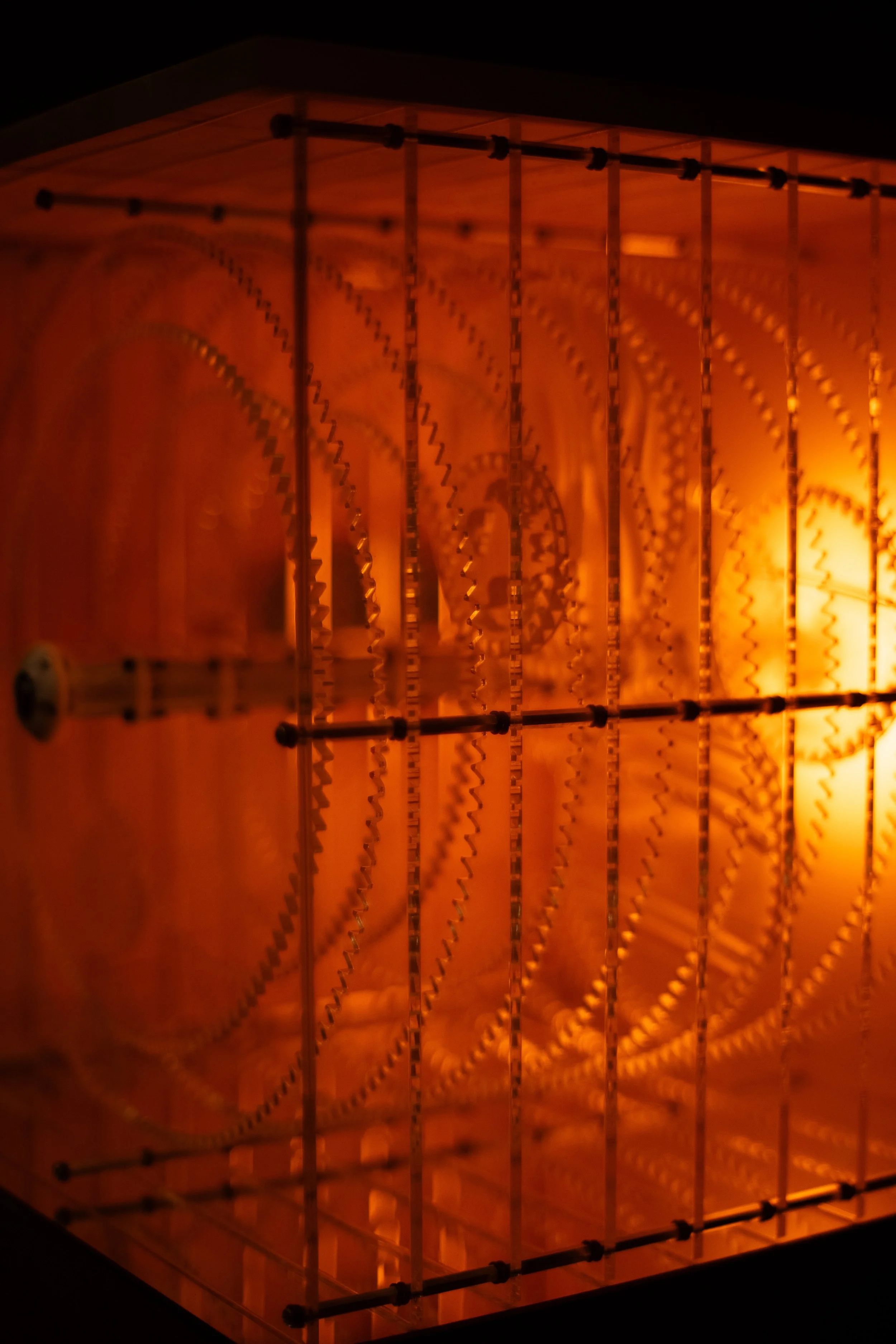
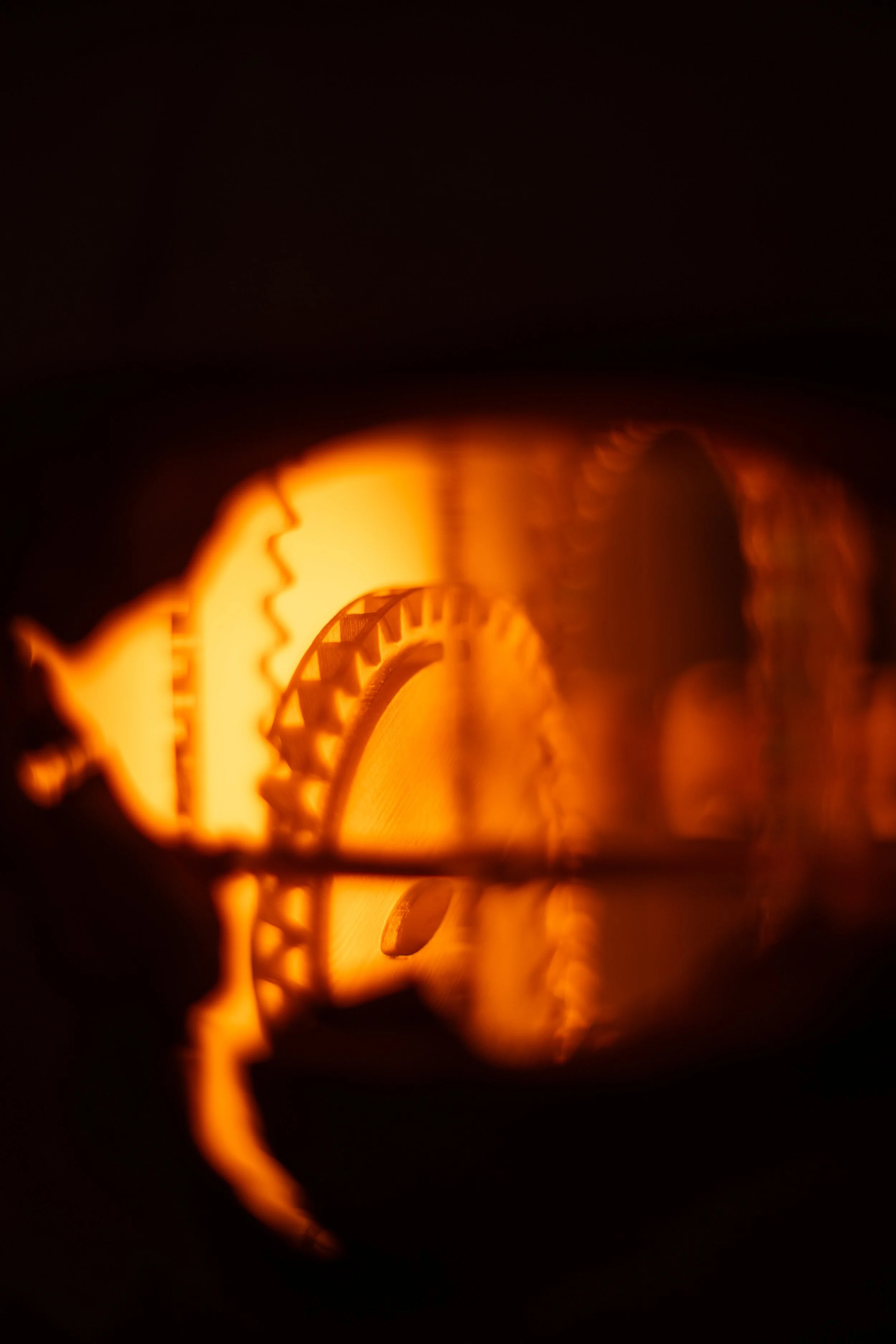
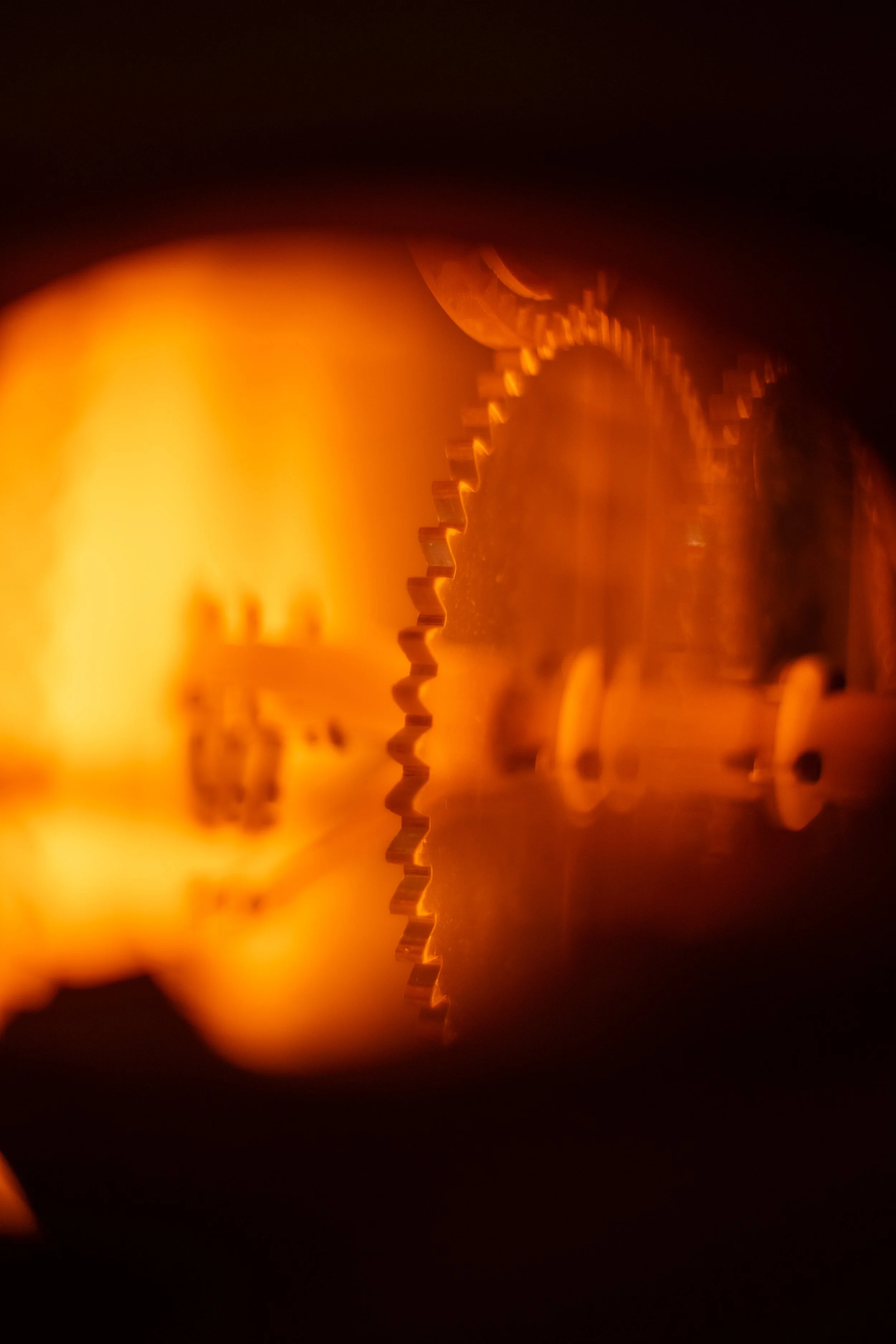
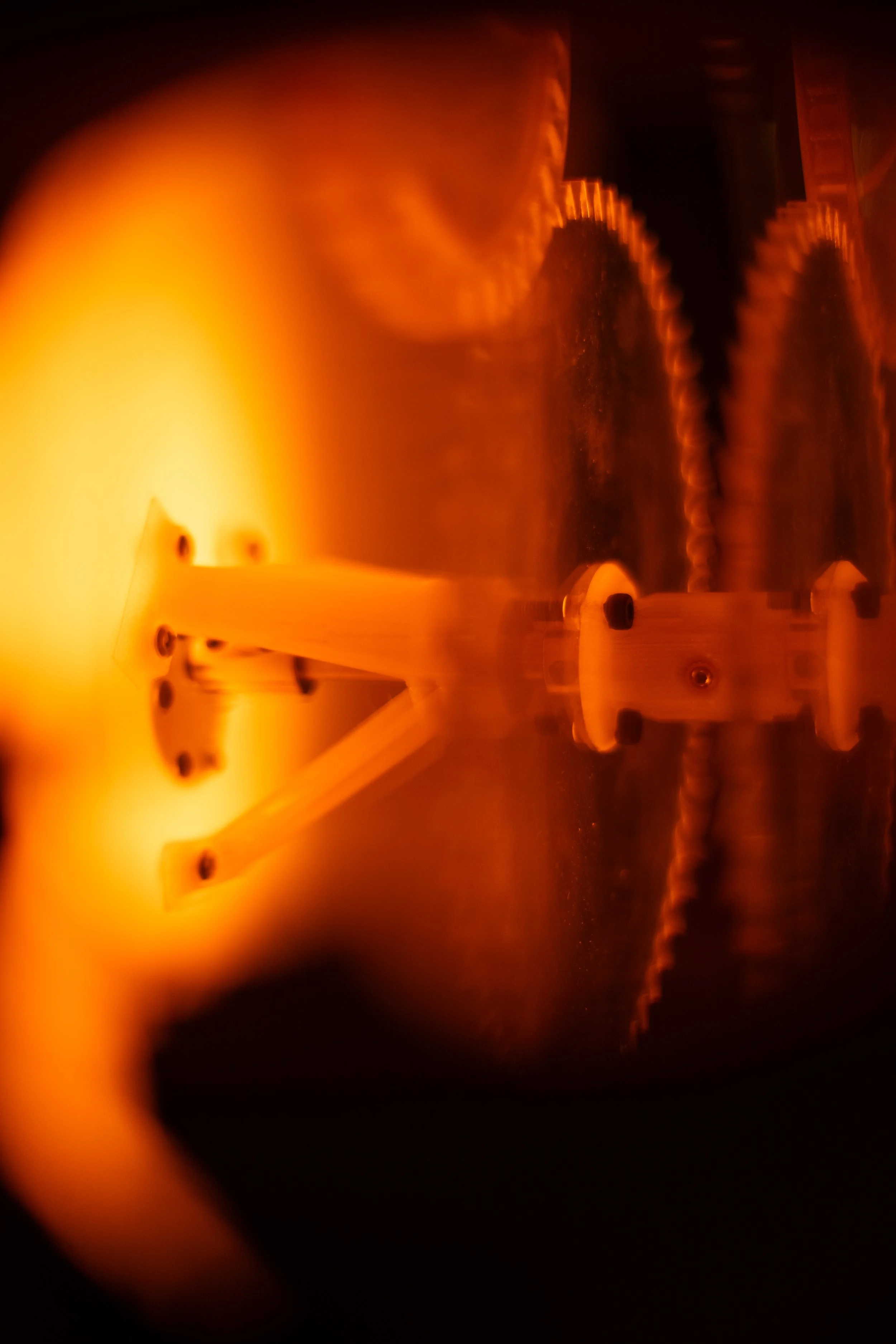
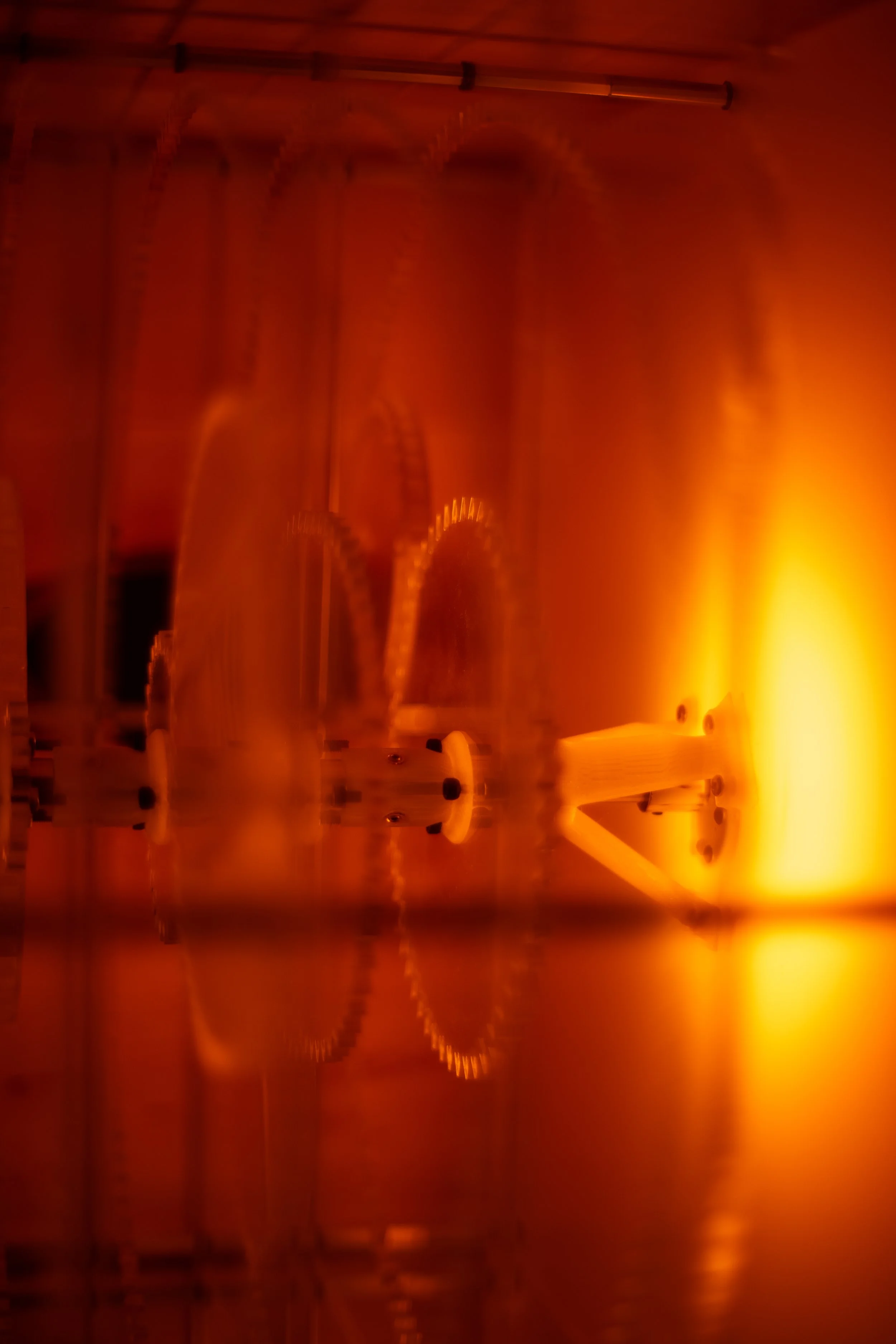
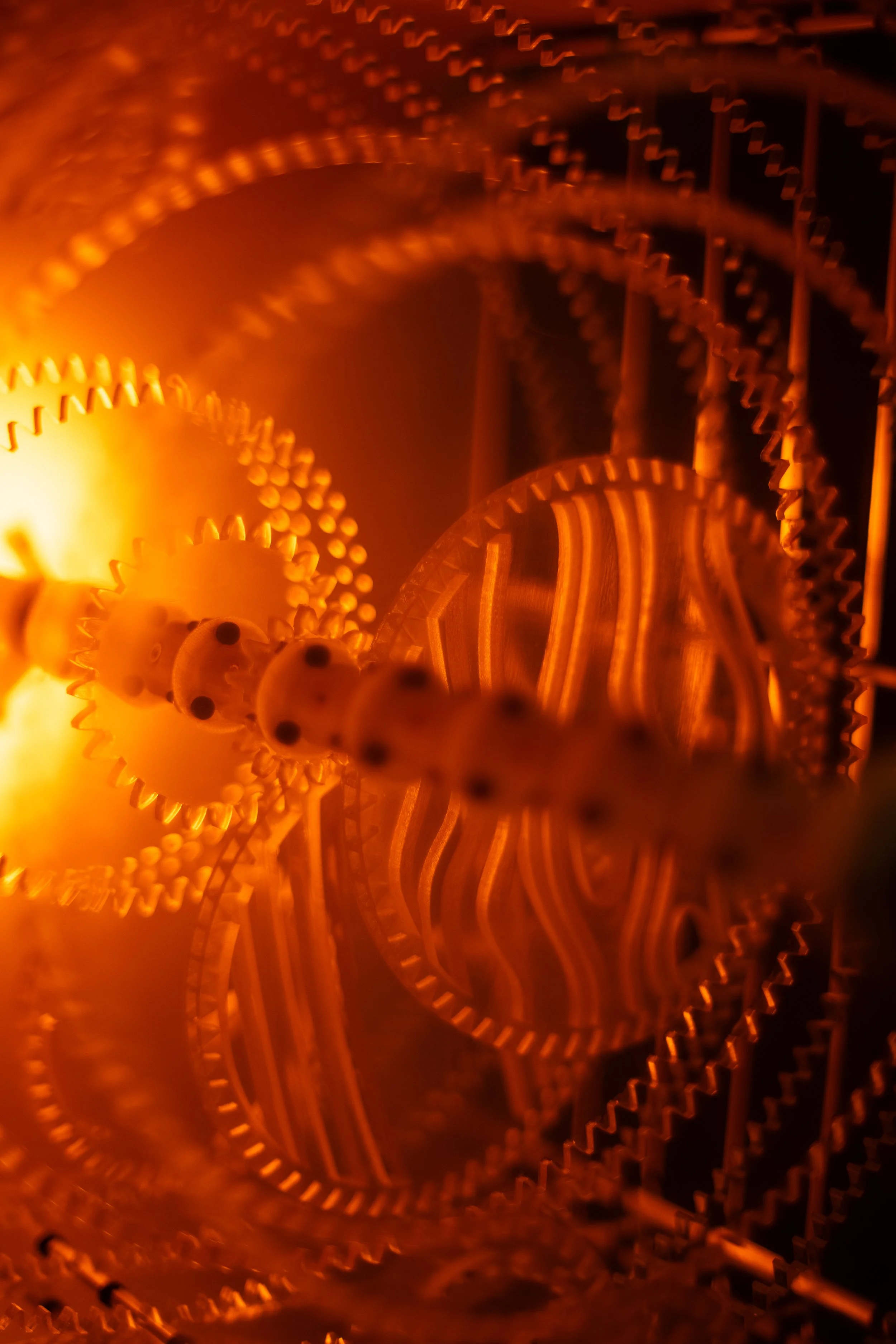
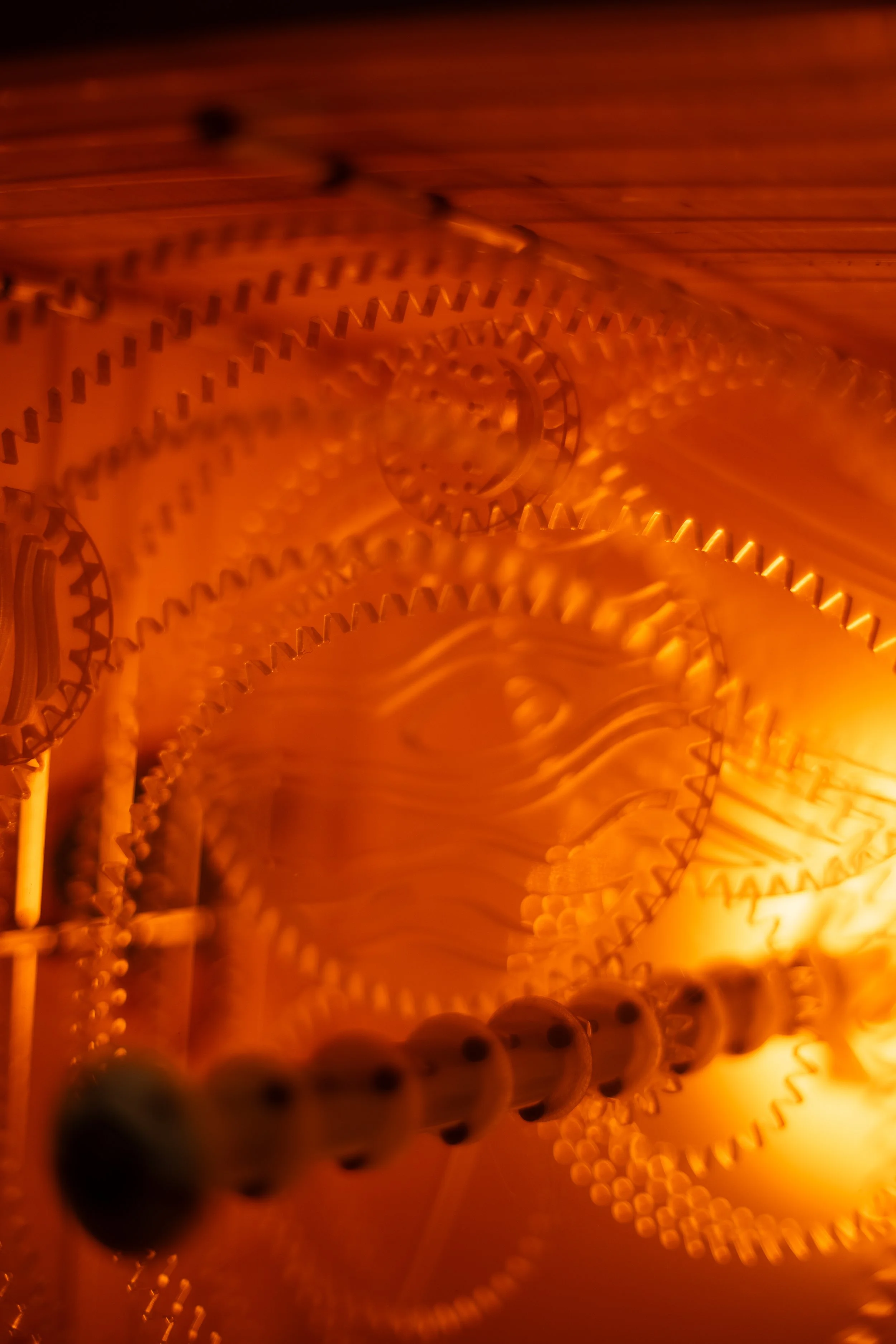
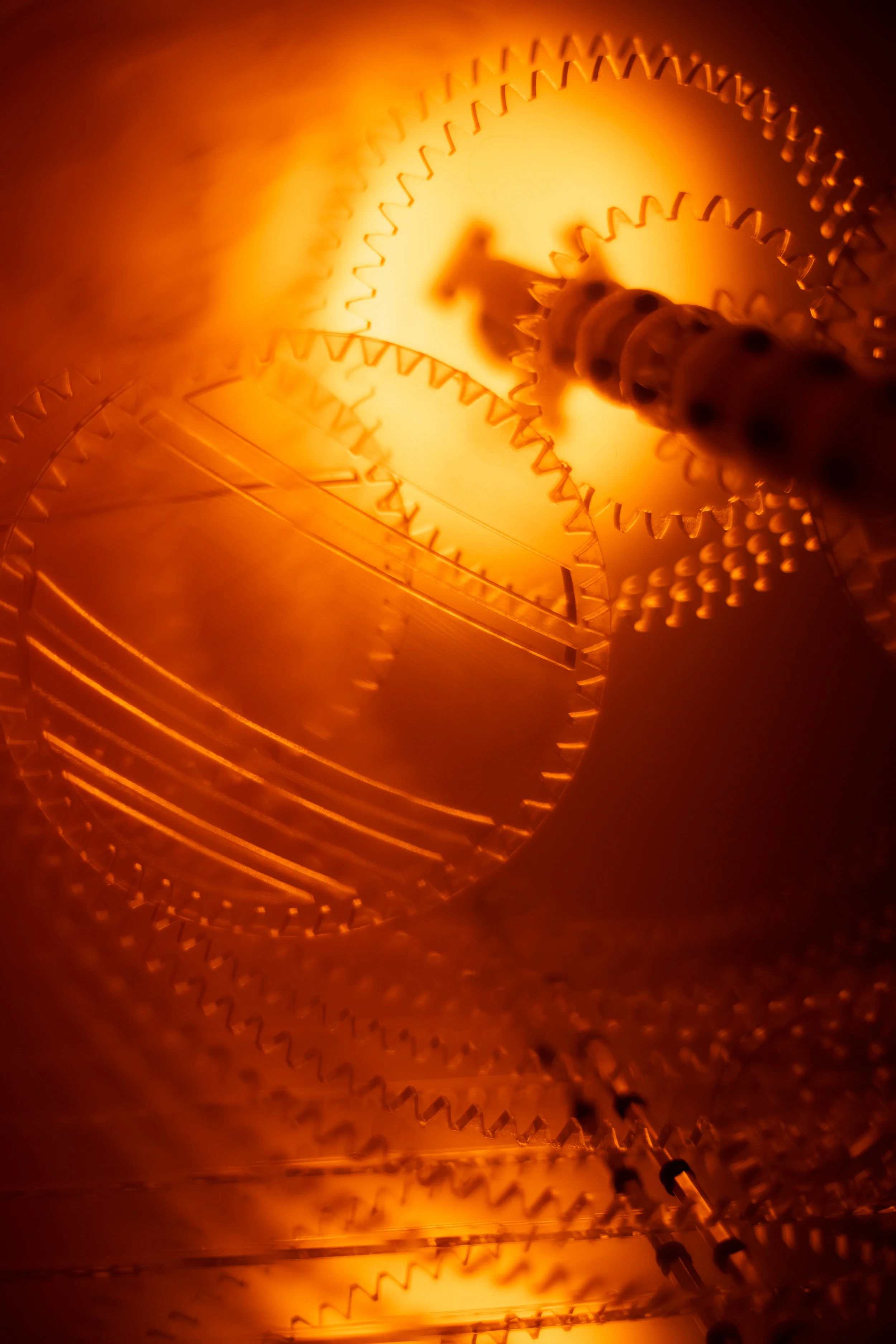
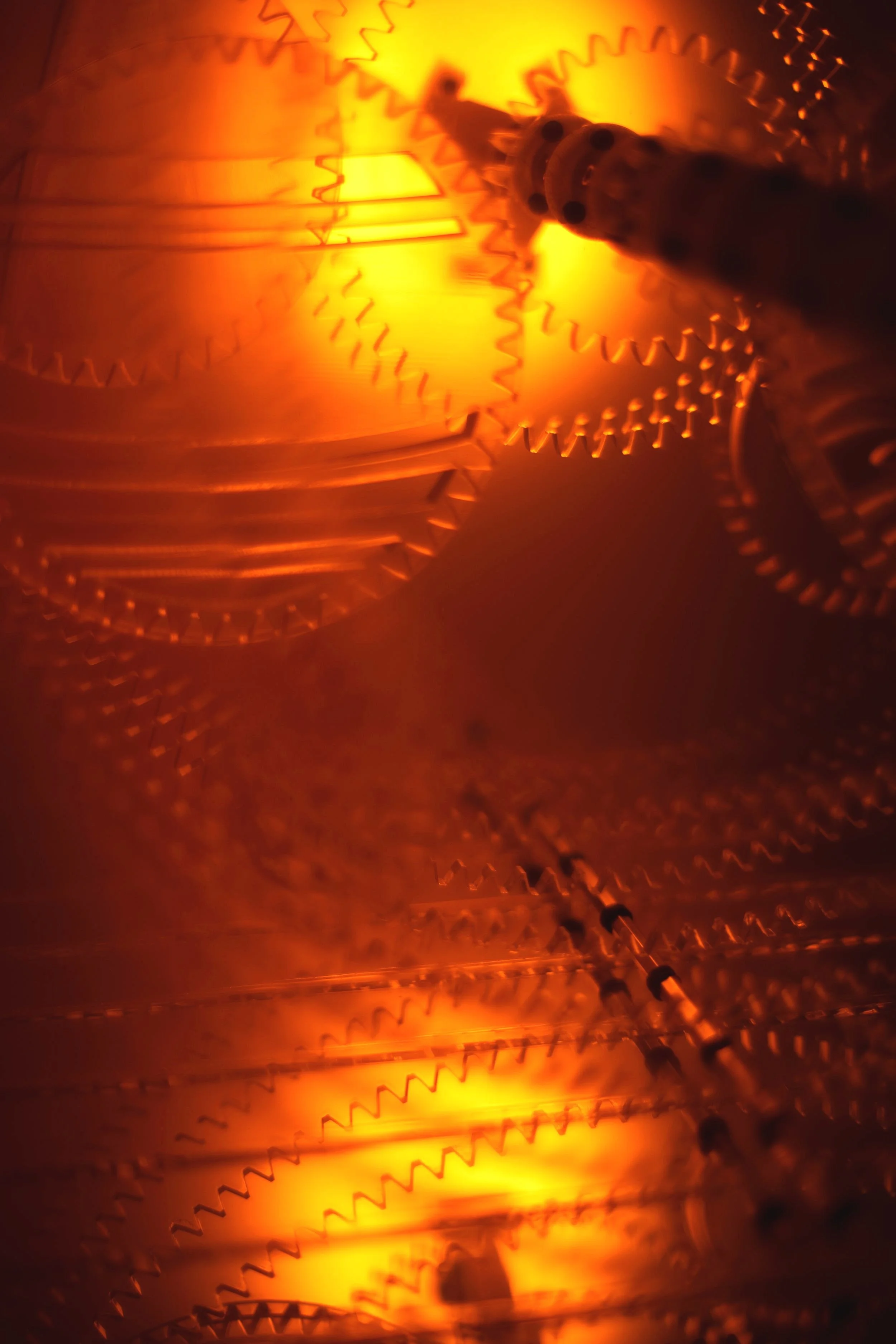
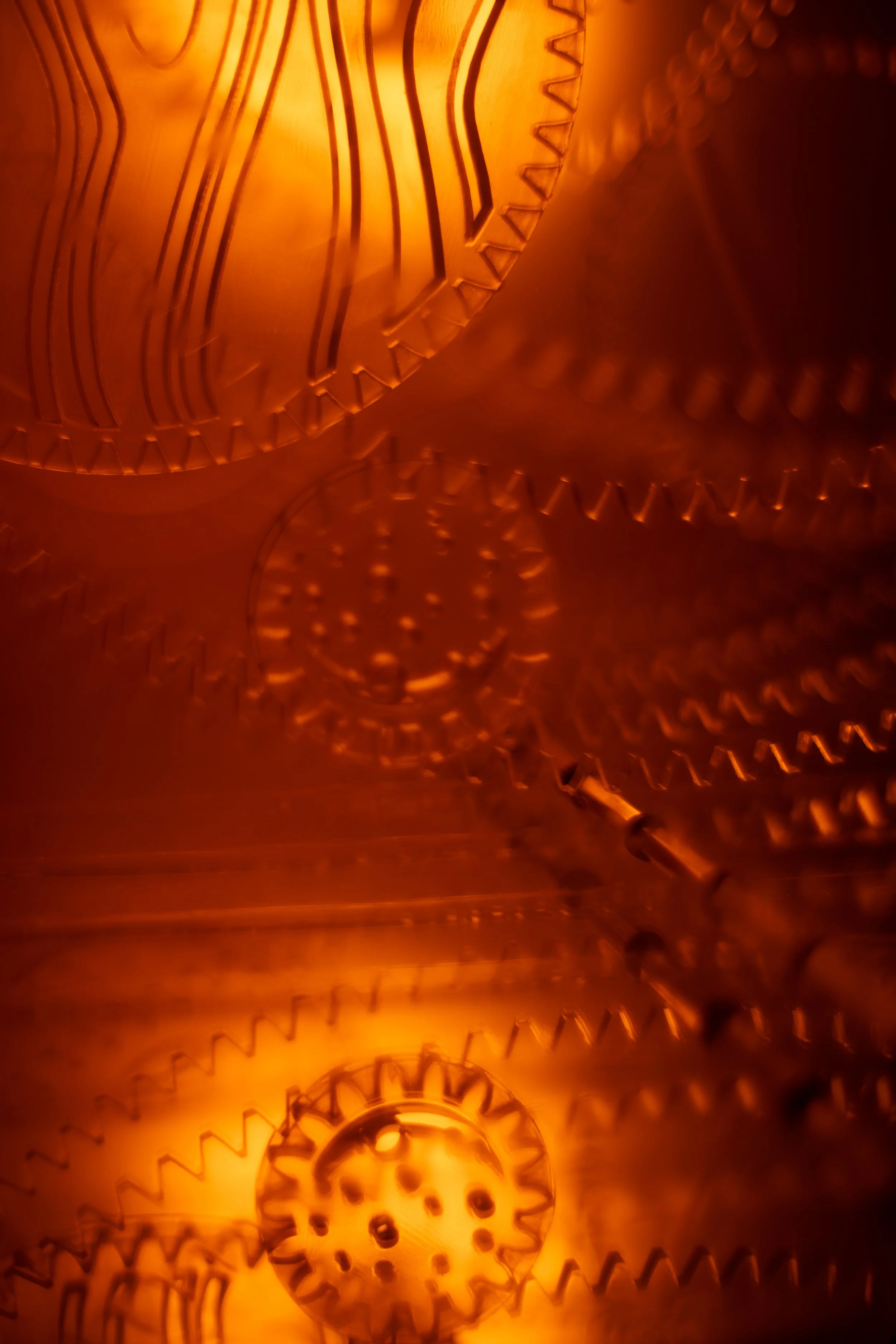
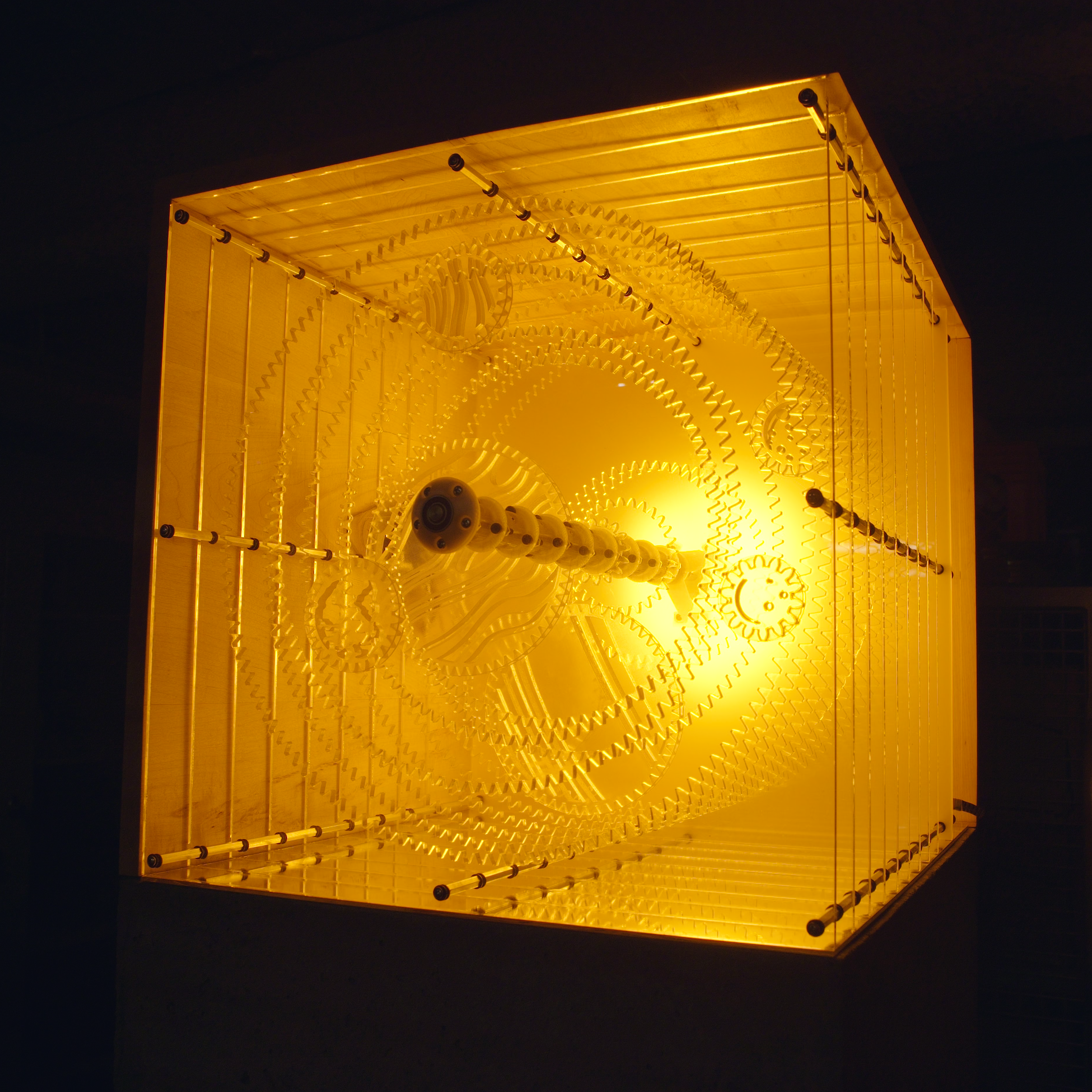
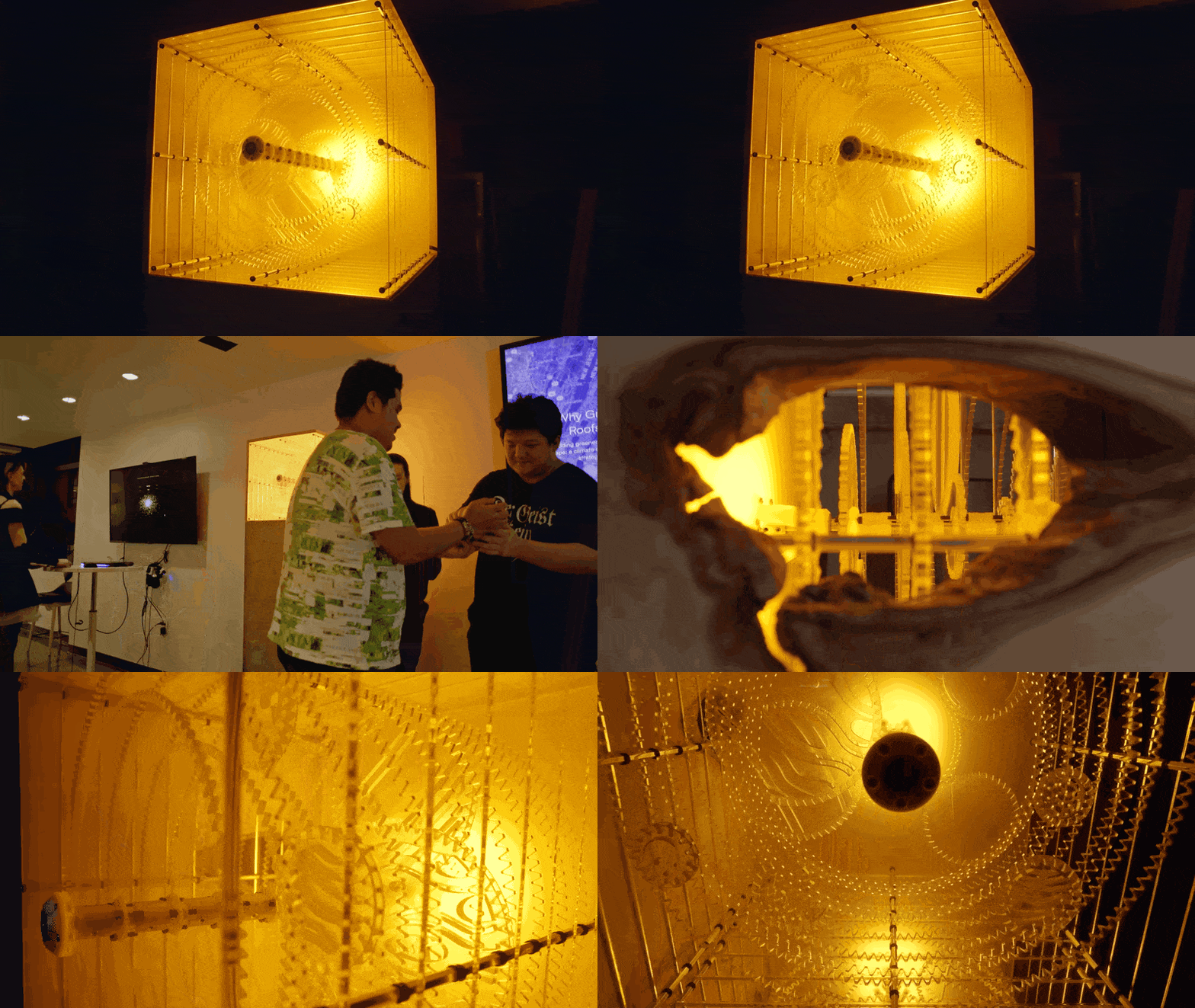
A kinetic installation that renders the conceptual pace of the solar system: eight layers of transparent planetary gearsets — 3D-printed and laser-cut, each gear sized to its planet — turning on a single shaft in the warm glow of amber LED backlight. The transparent movement is housed in a handcrafted maple frame and grounded on four hundred pounds of concrete; its three materials — plastic, wood, concrete — form an evolution that synthesizes the artificial and the natural into the totality we call the universe.
“Gravity constitutes matter such that matter is objective gravity. It is one and the same matter dividing itself into poles and thereby creating a line of cohesion, generating diverse shapes in a series of evolutions with different relations between the factors. This is gravity’s real difference, from which we distinguish the other, ideal difference, that of the potentials of time and space.”—— G.W.F. Hegel, De Orbitis Planetarum





- Yuxiang Cheng
- : Mechatronics, Modeling, 3D Printing, Assembly, Woodworking, Documentation
- Long L
- : Concept, Astrophysics, Modeling, Assembly, Concrete
Steve Sun helped with fabrication.
Statement
De Orbitis Planetarum began with a simple intention: to render the pace of the solar system as a mechanism — eight stacked layers of planetary gearsets, one shaft, one motor turning at two revolutions per minute, amber light behind transparent gears.
The first decision was already the whole problem. A gear train can honor the planets’ bodies or their clocks, but not both. The orbital periods span 684:1 between Neptune and Mercury — no stack of acrylic and resin can hold that spread. Their diameters span 29:1, which a frame can hold. So the gears took the planets’ sizes and surrendered their speeds. What turns in the frame is not the solar system’s pace but a pace the material itself proposed: the concept enters matter, and matter answers with laws of its own.
Rational numbers only
Gear teeth come in integers, so the speed ratio between any two layers is a rational number, and locked so forever — what celestial mechanics calls an orbital resonance. In the real solar system, exact commensurability is the rare exception: a miracle where it stabilizes — Neptune and Pluto’s 3:2, the 1:2:4 Laplace resonance of Io, Europa, and Ganymede — and a zone of destruction where it does not: the Kirkwood gaps, swept clean wherever an asteroid’s period forms a rational ratio with Jupiter’s. This piece is therefore a cosmos built entirely of resonances — a condition that, in the actual sky, is everywhere either miracle or catastrophe. The material’s self-realization here takes the form of number theory: the moment the teeth mesh, irrational numbers are banished from the universe.
Contact, and a force that never touches
Real orbits are held by gravity — a field, constraining without any touch, each planet in free fall along its own geodesic. Gears are the exact opposite: constraint by pure contact, tooth biting tooth. And the finer point: the only duty real gravity performs in this piece is at the four-hundred-pound concrete base. The force appears only as weight, exiled to the pedestal, never once participating in the motion it is supposed to govern. Hegel’s epigraph speaks throughout of gravity constituting matter — while in the machine, the mesh has usurped gravity’s throne.
Clockwork only inside clockwork
A gear train is holonomic, perfectly reversible, without chaos. The real solar system has a Lyapunov time of roughly five million years; beyond a hundred million, no computation can say where the planets stand. The Newton–Laplace clockwork universe was always a metaphor; this piece literalizes the metaphor, and the instant of literalization is the proof of its falsehood: the universe is clockwork only inside a clock. Reverse the motor, and these heavens run backward. The real ones refuse.
The word’s round trip
Sun gear and planet gear entered engineering from astronomy — by way of James Watt’s sun-and-planet gear of 1781, devised by William Murdoch, its name an ornament, its purpose a workaround: converting the steam engine’s reciprocation into rotation while dodging another man’s patent on the crank. This piece now maps the mechanism back onto the sky: the signifier returns home, carrying the dust of steam engines and patent wars. Beneath the borrowed name lies a deeper asymmetry. The real Sun’s rotation does no work on the orbits — the planets coast on angular momentum inherited from the primordial disk, needing no power at all — while our motor labors day and night against friction to keep the sun shaft turning. The celestial system moves without working; the geared universe must work in order to move. A heliocentric theory of labor.
Born Ptolemaic
A gear knows only uniform circular motion, and Kepler is explicit: orbits are ellipses, swept at varying speed. What this mechanism can render, then, is precisely pre-Keplerian astronomy — the uniform circular motion that Ptolemy and Copernicus alike held sacred; the epicycle was always gear-shaped. The piece thereby joins a lineage two thousand years long: the Antikythera mechanism — the oldest geared device known, and precisely a planetary calculator, whose pin-and-slot gearing forced an approximation of the Moon’s unequal motion, mechanics answering Kepler before the question was asked — then de’ Dondi’s astrarium, the orrery, Watt. The impossibility of mapping we ran into, the Antikythera craftsmen met two thousand years ago. They forced a hack; we chose not to solve it, and let the material state its own case. Across two millennia the material’s answer has not changed. The maker’s attitude has.
The shaft bears the sum
One difficulty in the build was genuinely mechanical: many forces of different directions converging on a single shaft. Every mesh presses two forces onto it — the tangential force that carries torque, and the radial separating force set by the pressure angle, about a third of the tangential, forever pushing the gears apart. Eight layers occupy eight stations along the shaft, their gears differing in size and phase, so eight sets of force vectors disagree in direction, magnitude, and height. The shaft carries torsion superposed on three-dimensional bending, and since it rotates inside that bending field, it lives in the textbook condition for fatigue; worse, deflection degrades mesh alignment, which unbalances the loads, which deflects it further.
Standard planetary design dissolves exactly this problem by symmetry: three planets equally spaced, radial forces cancelling, the sun floating in equilibrium. This piece could not use that solution — each layer stands for one celestial planet, its gears sized by the solar system, not by force balance. The symmetry forfeited, the loads do not cancel: fidelity of representation and elegance of mechanics could not both be had.
Yet this is the one place where the mapping succeeded without being asked. The real Sun also bears the vector sum of its planets’ pulls, staggering around the barycenter — Jupiter alone drags that point outside the solar surface — and astronomers discover other worlds precisely by reading this stagger in other suns. Every paradox above says the kinematic mapping must fail; in statics, the mapping arrived uninvited. Where we tried hardest to make the mechanism resemble the heavens — in motion — it refused. Where we asked for nothing — in load — it complied. A central body standing under the summed force of its planets: in this, the machine and the sky are the same.
These are not separate ironies but one, seen from many sides: concept enters matter, and matter replies with laws of its own — integer, contact, uniformity, reversibility, dissipation — each the exact inverse of the heavens’ way. The piece takes its name from Hegel’s dissertation, which sought to derive the orbits from reason and was embarrassed by observation. This machine inherits that embarrassment on purpose and wears it in the open: reason’s orbits, cut in acrylic and resin, diverging from the sky’s — matter, as Hegel wrote, dividing itself into poles and generating shapes and evolutions of its own.
Process
Gear system
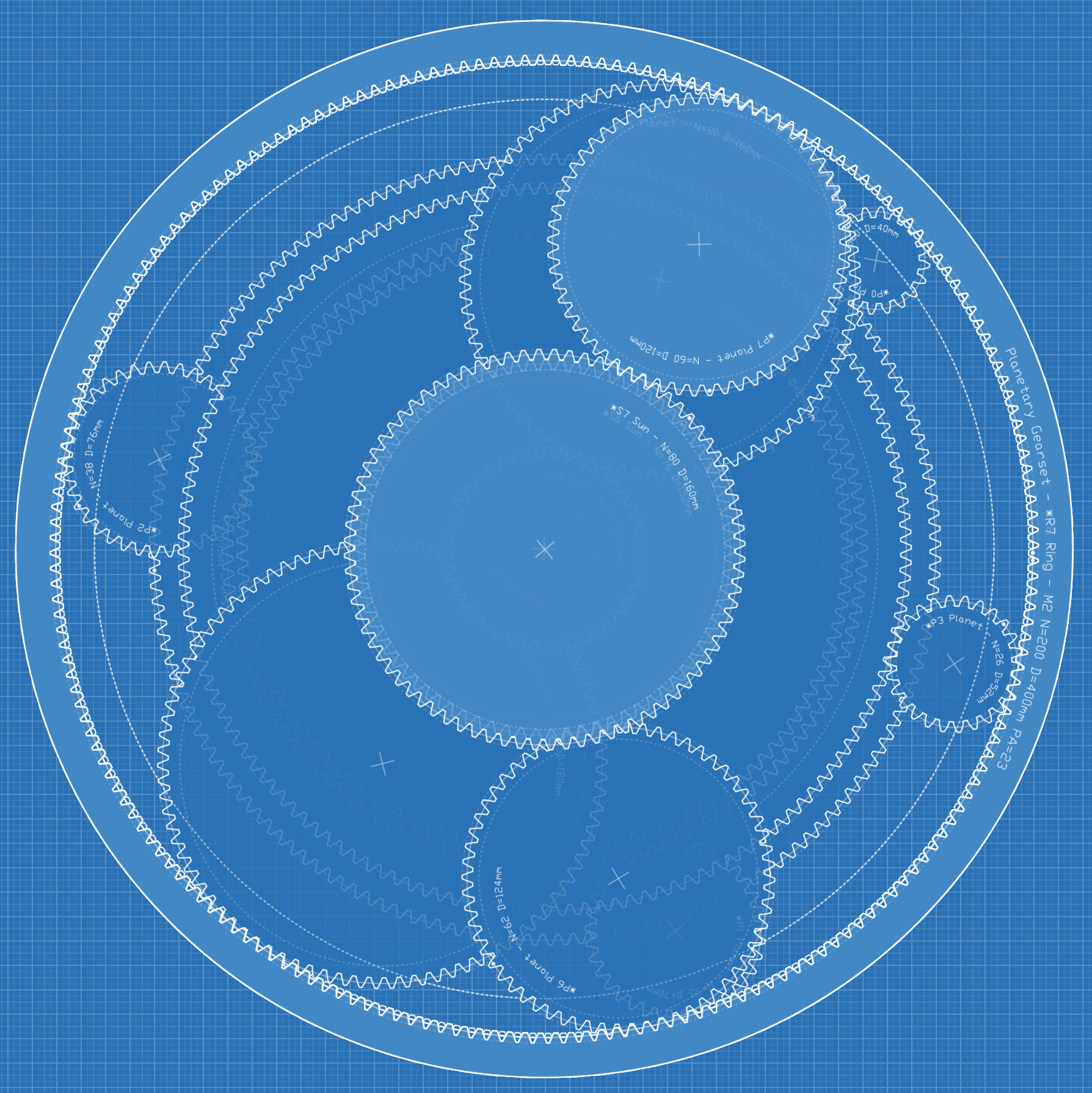
Everything in the piece is dimensioned around the planetary gearsets, so that is where the design began. With the concept of stacked planetary layers settled, we bought panels of 1/4” acrylic to be cut into the frames and sun gears.
Electronics
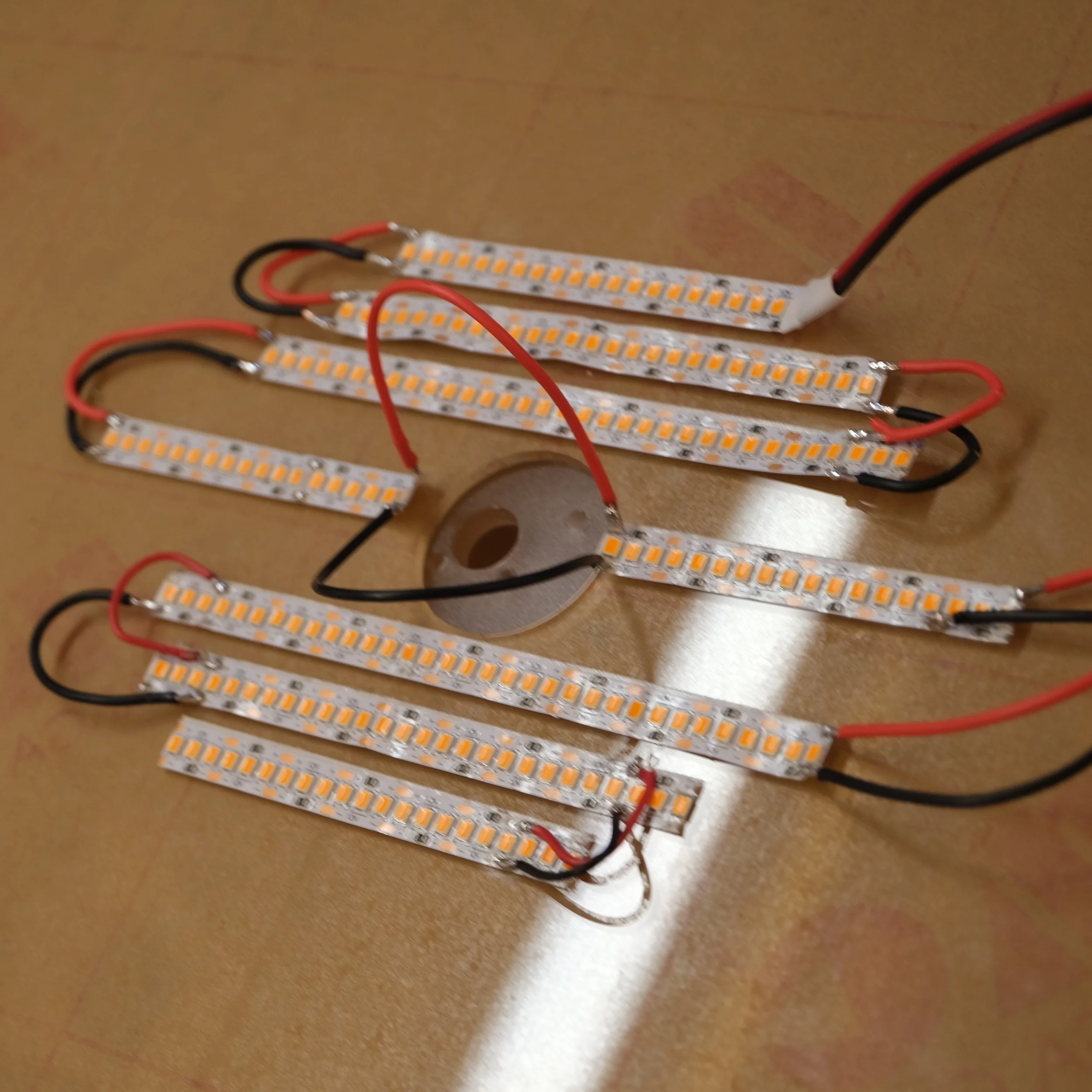
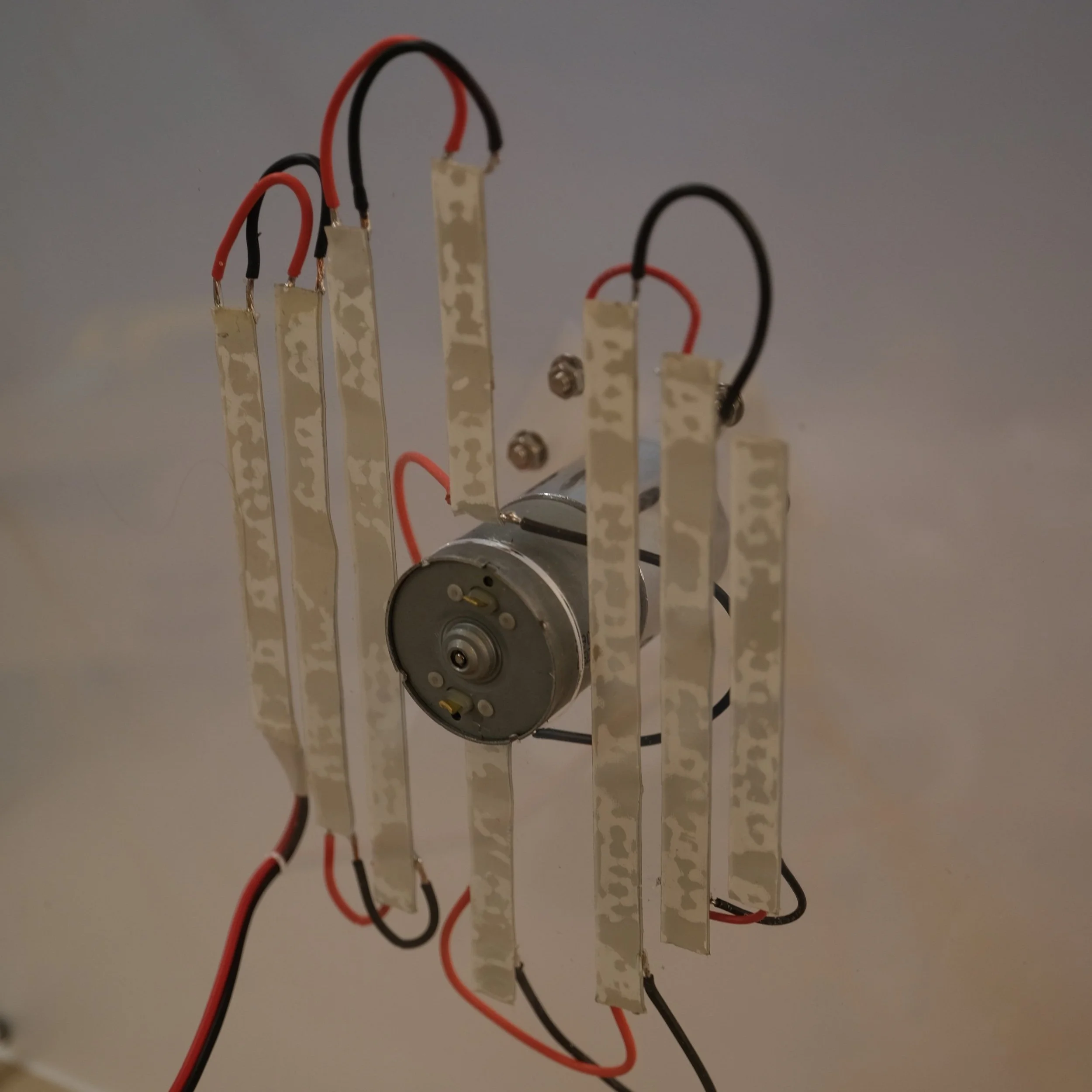
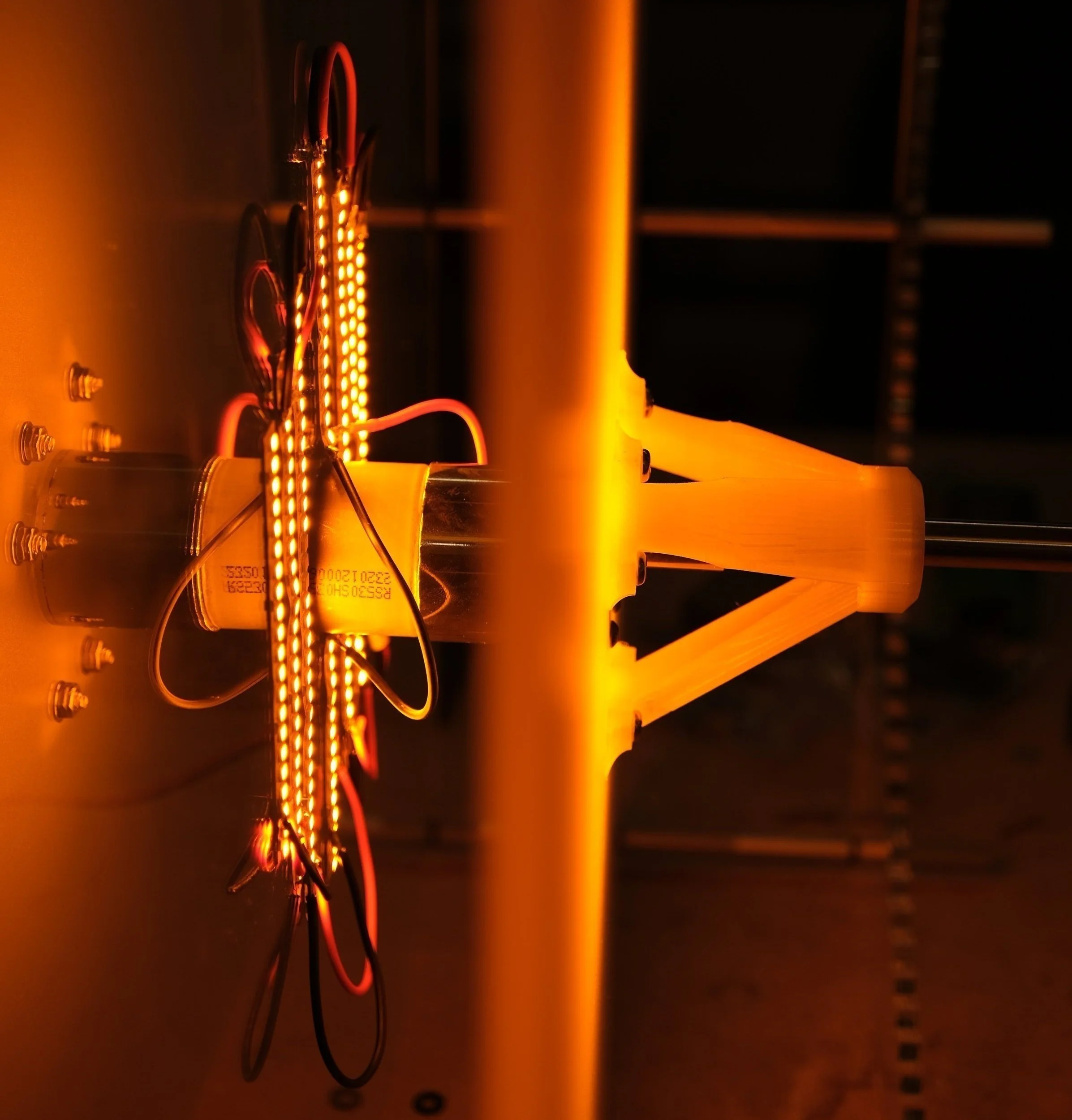
I started the build with the electronics — the most straightforward subsystem of this project. After comparing options I settled on 12 V amber LEDs, arranged so their light diffuses into a round glow. The motor matches them at 12 V and turns at 2 rpm — the slowest option, and therefore the highest torque.
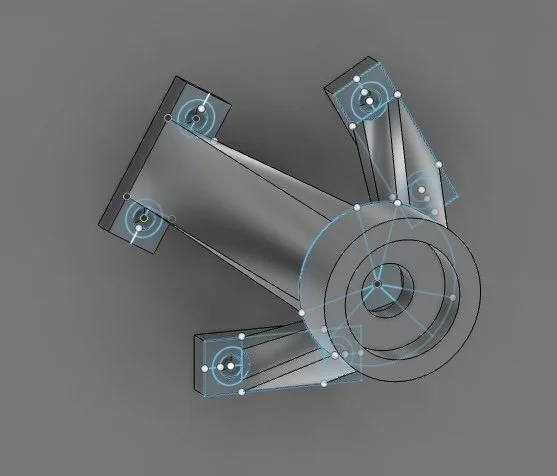
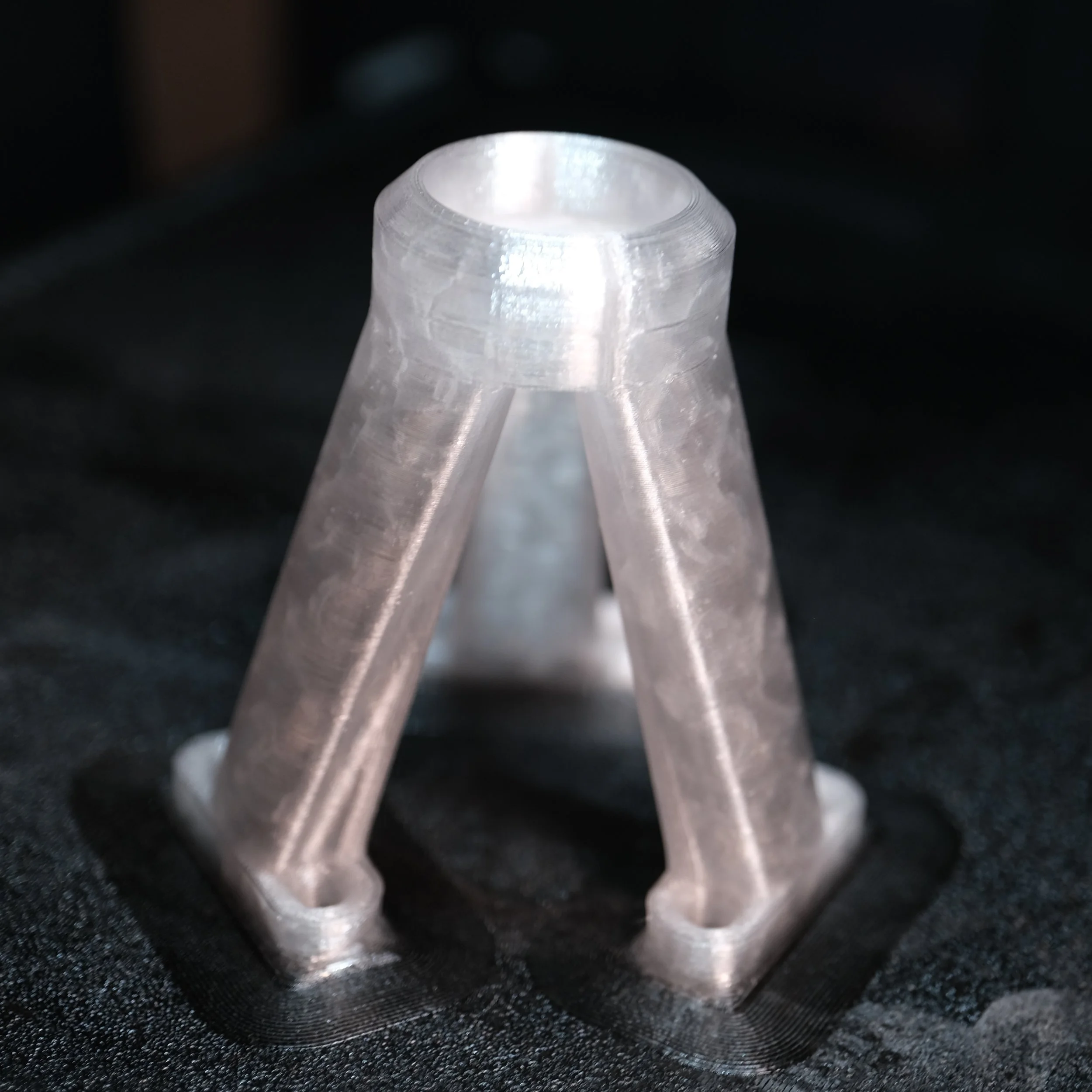
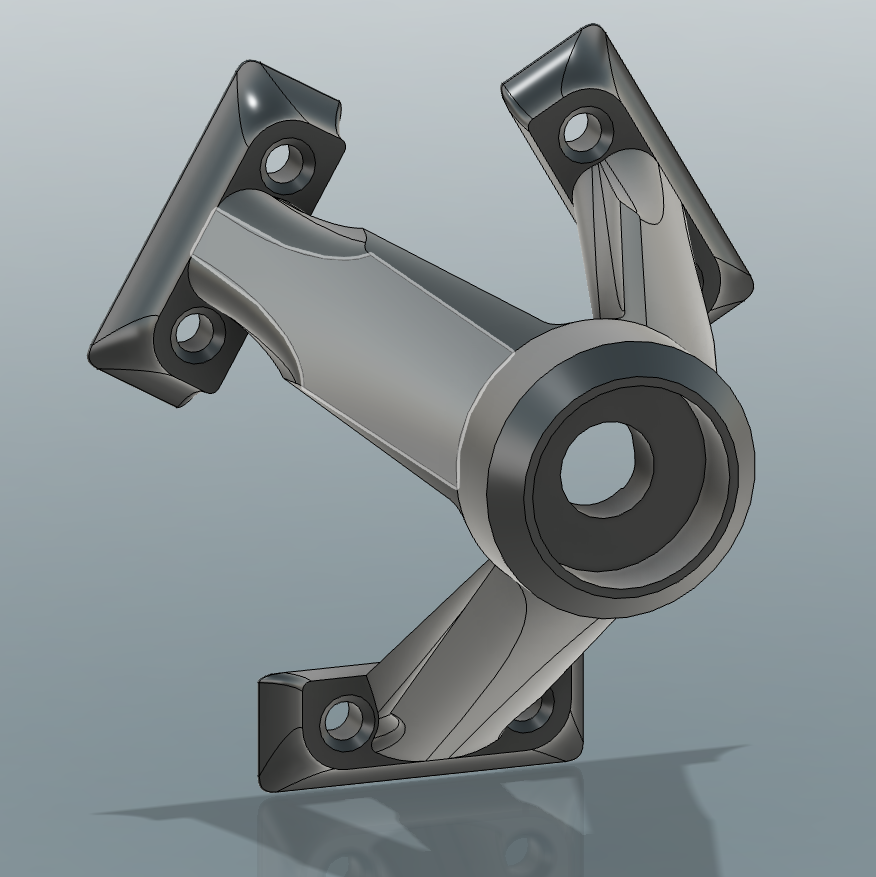
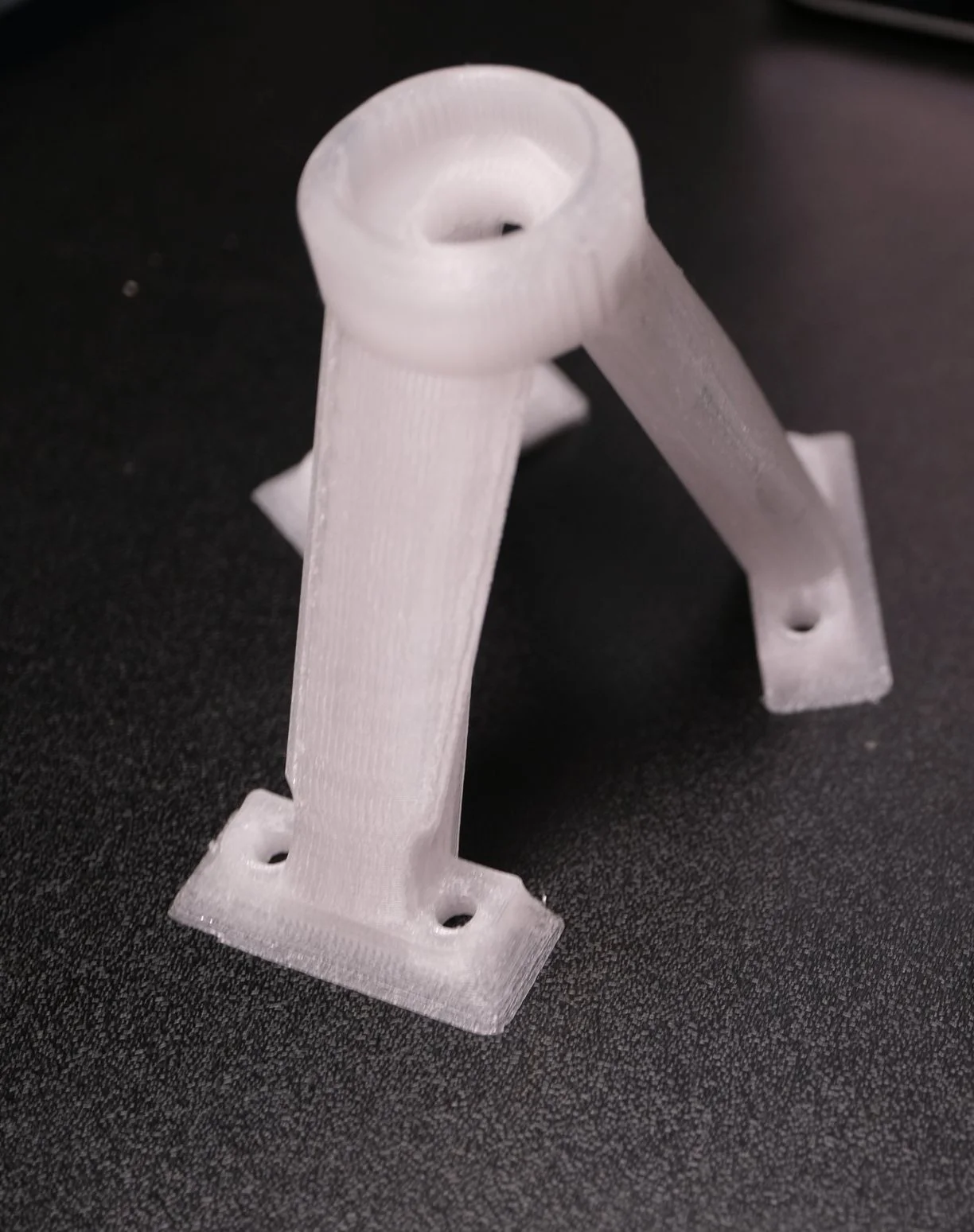
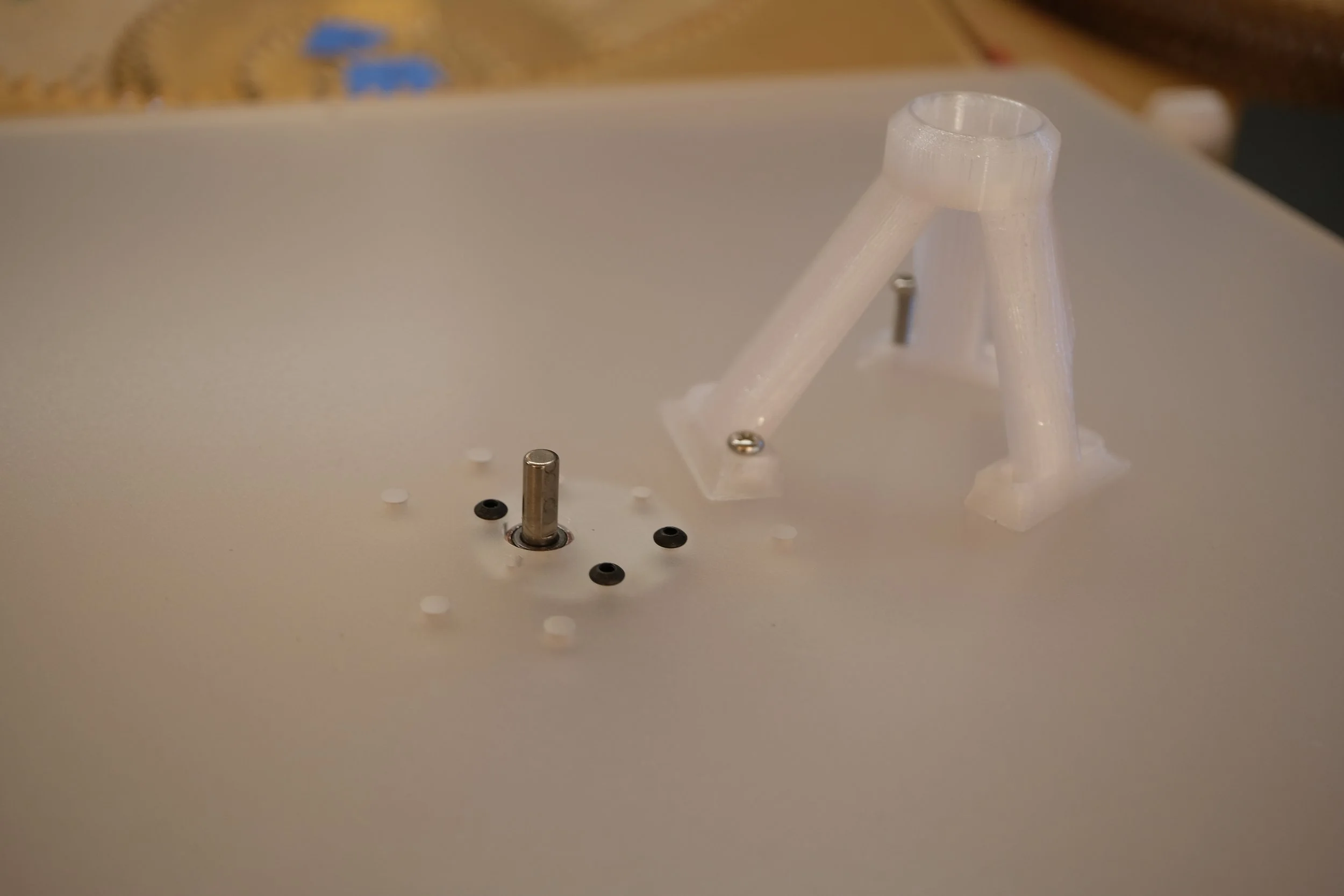
Then came the kind of task I do every day: measure and design a mount from this to that — here, from the motor axle to the main shaft. The mount also seats a bearing, as anything rotary requires, and took two iterations.
First assembly
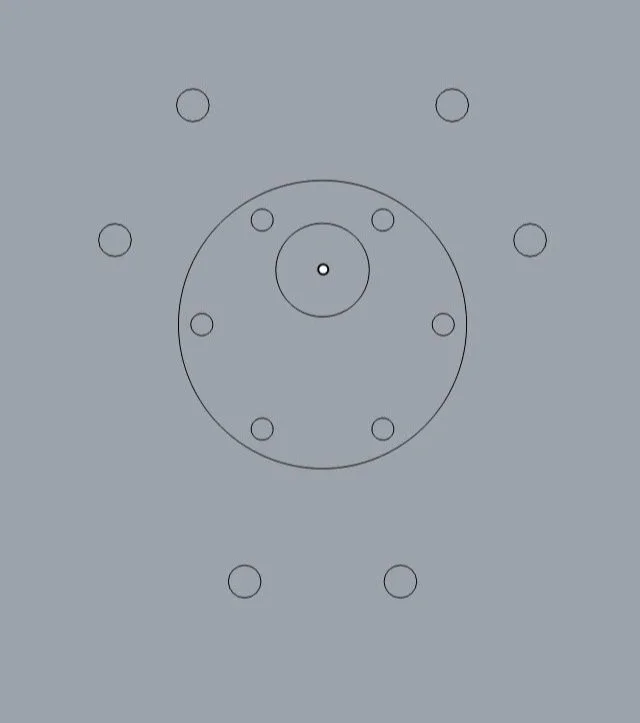
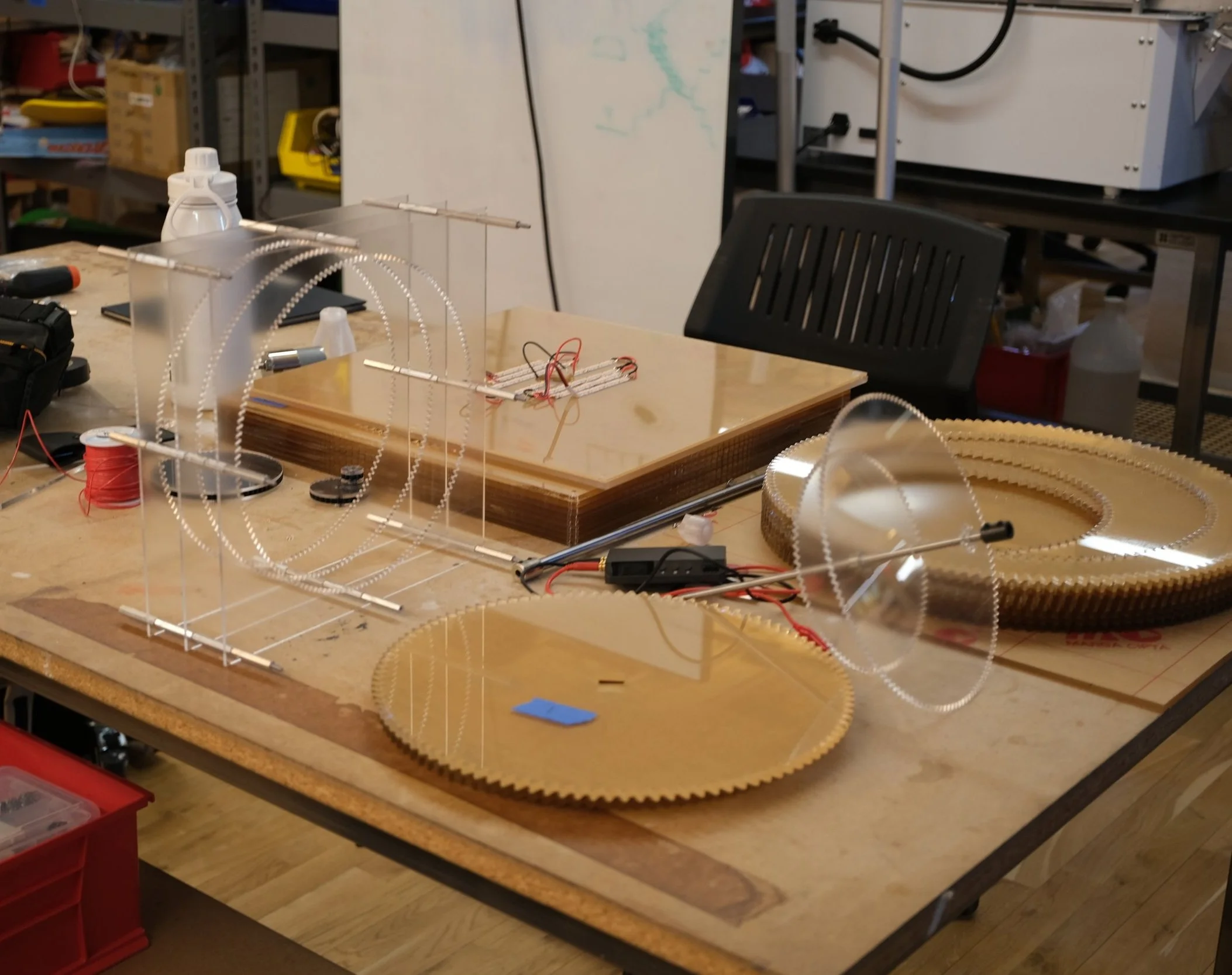
With those in hand, we mapped the screw holes onto the drawings, laser-cut the two back panels, and put the first assembly together.
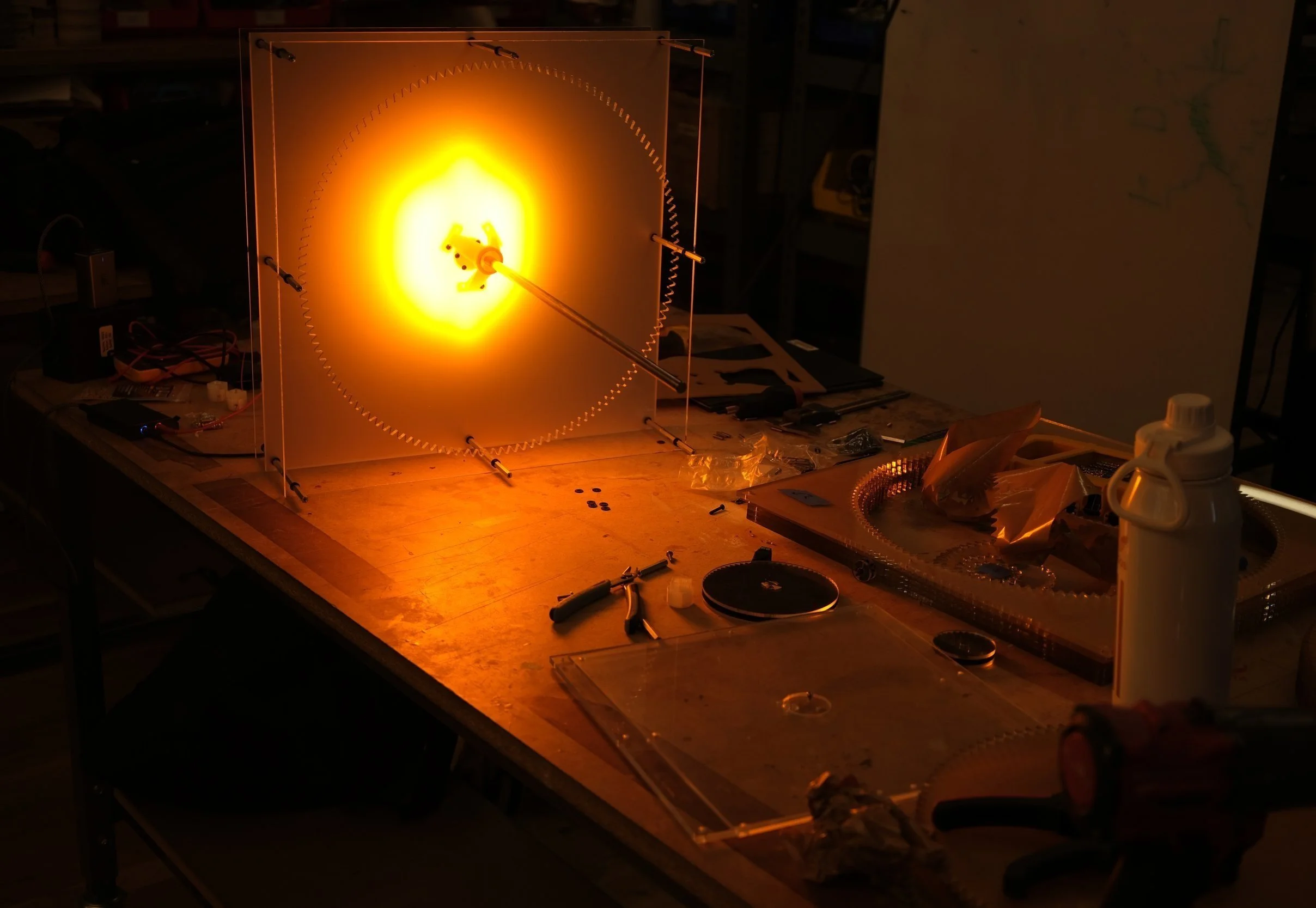
Shaft & flange
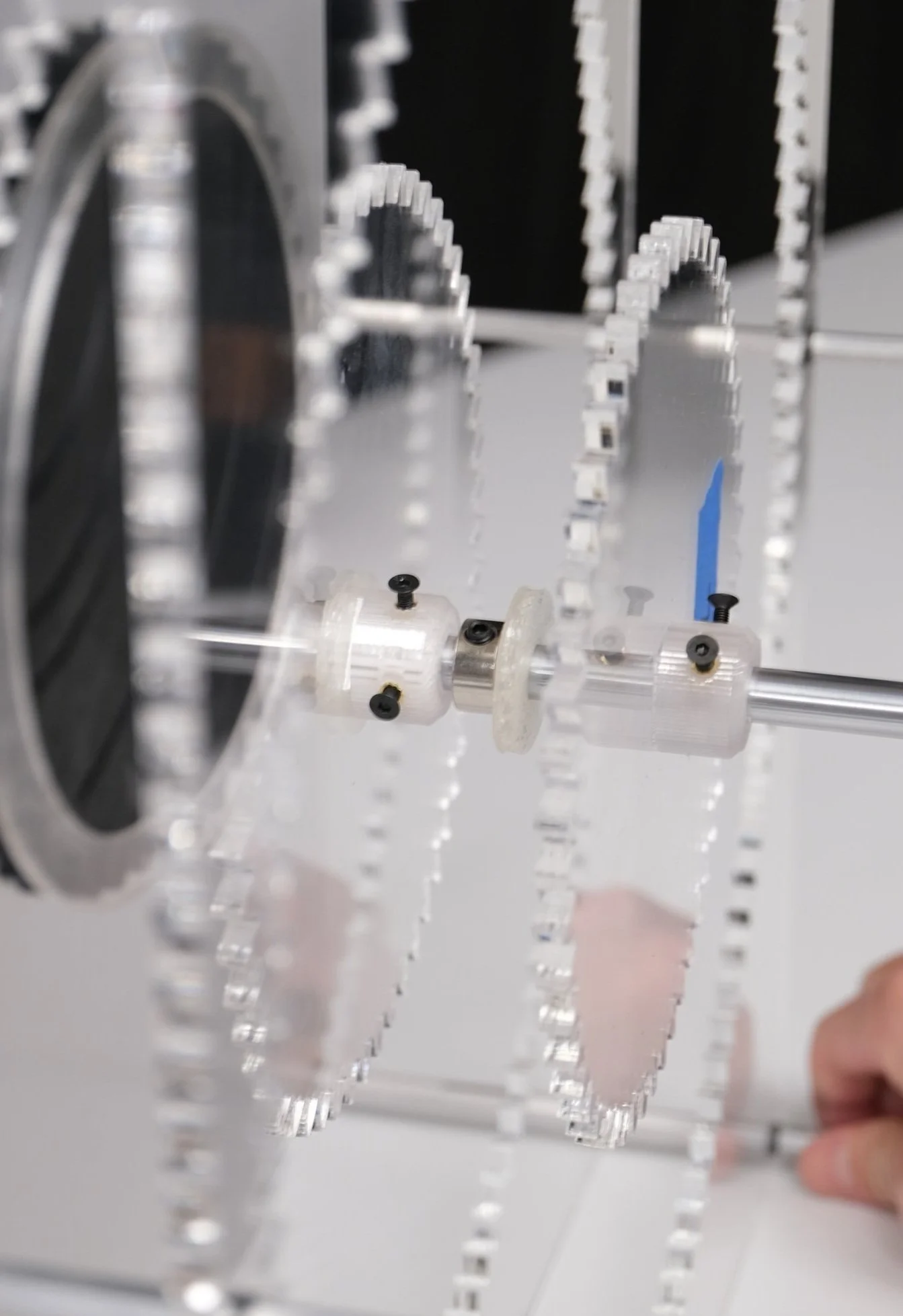
The work then turned to designing every individual part — and the mechanical system as a totality. Most of my design and iteration went into manufacturing the gears and the structure carried on the shaft.
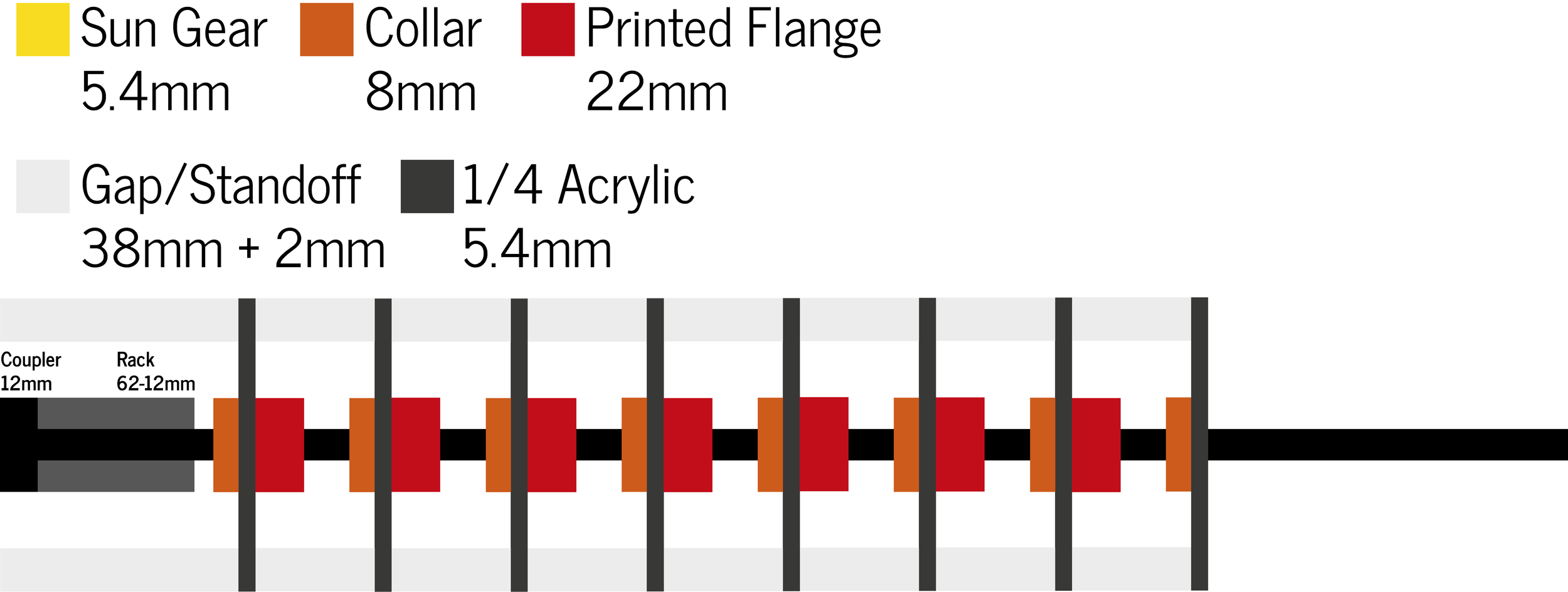
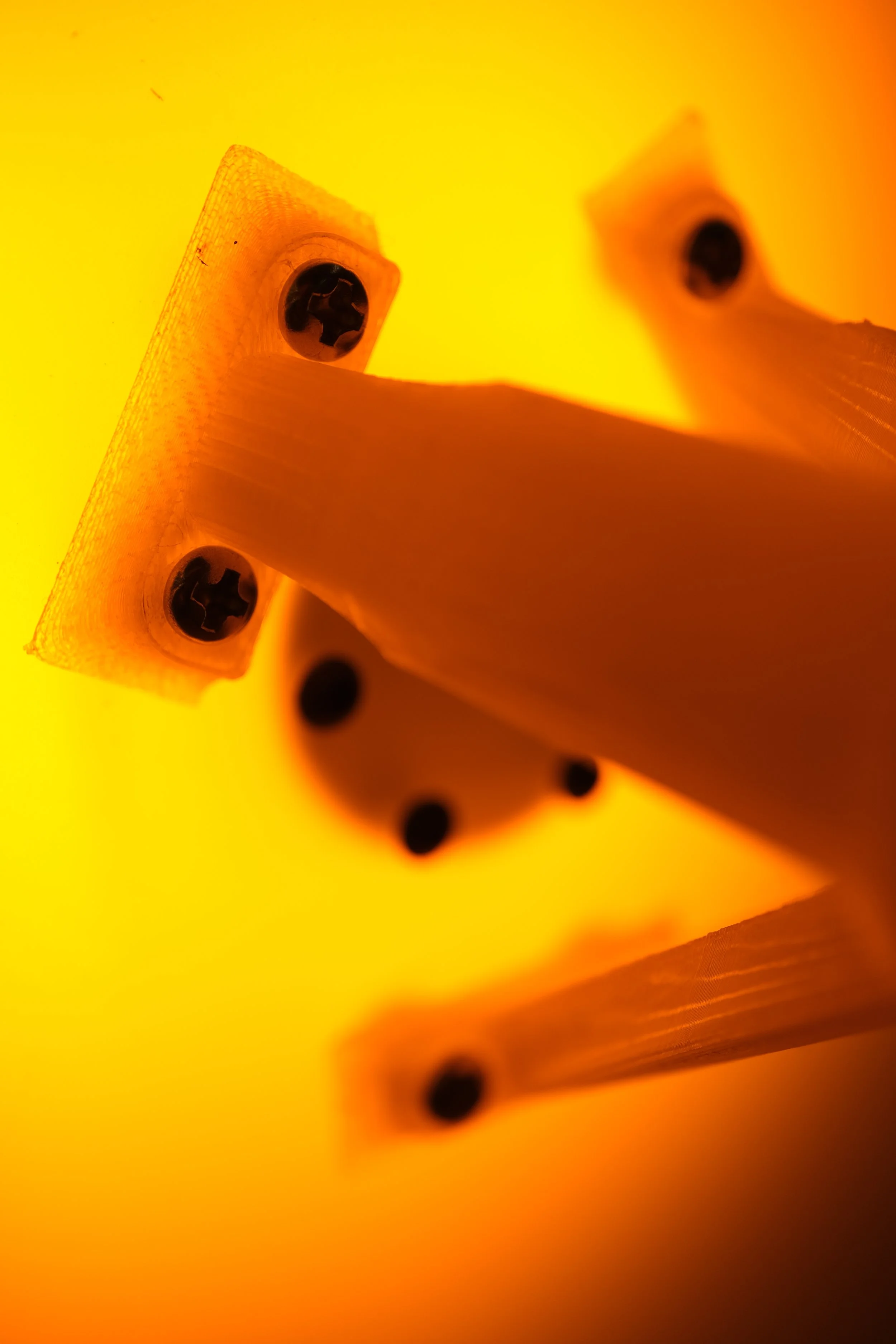
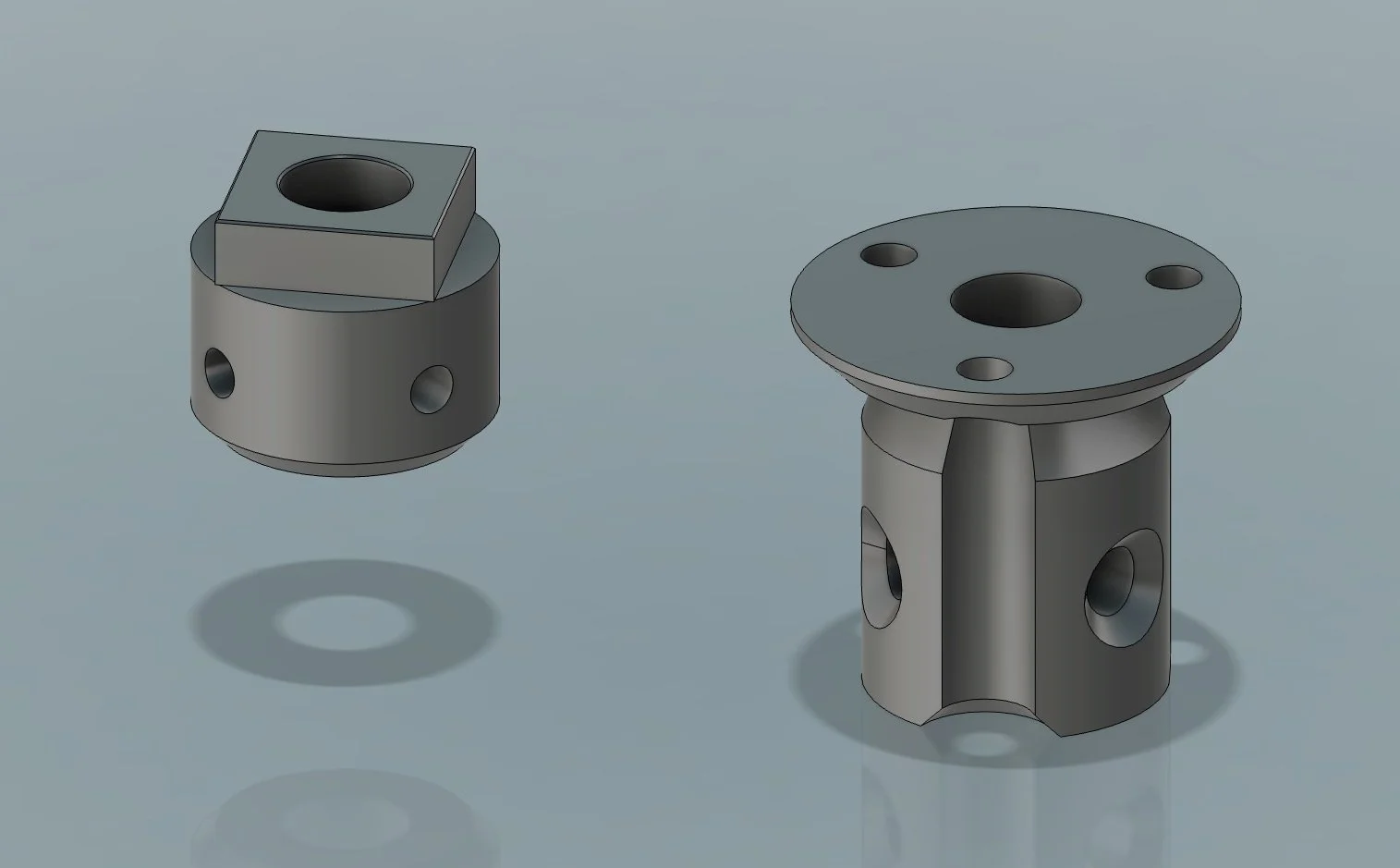
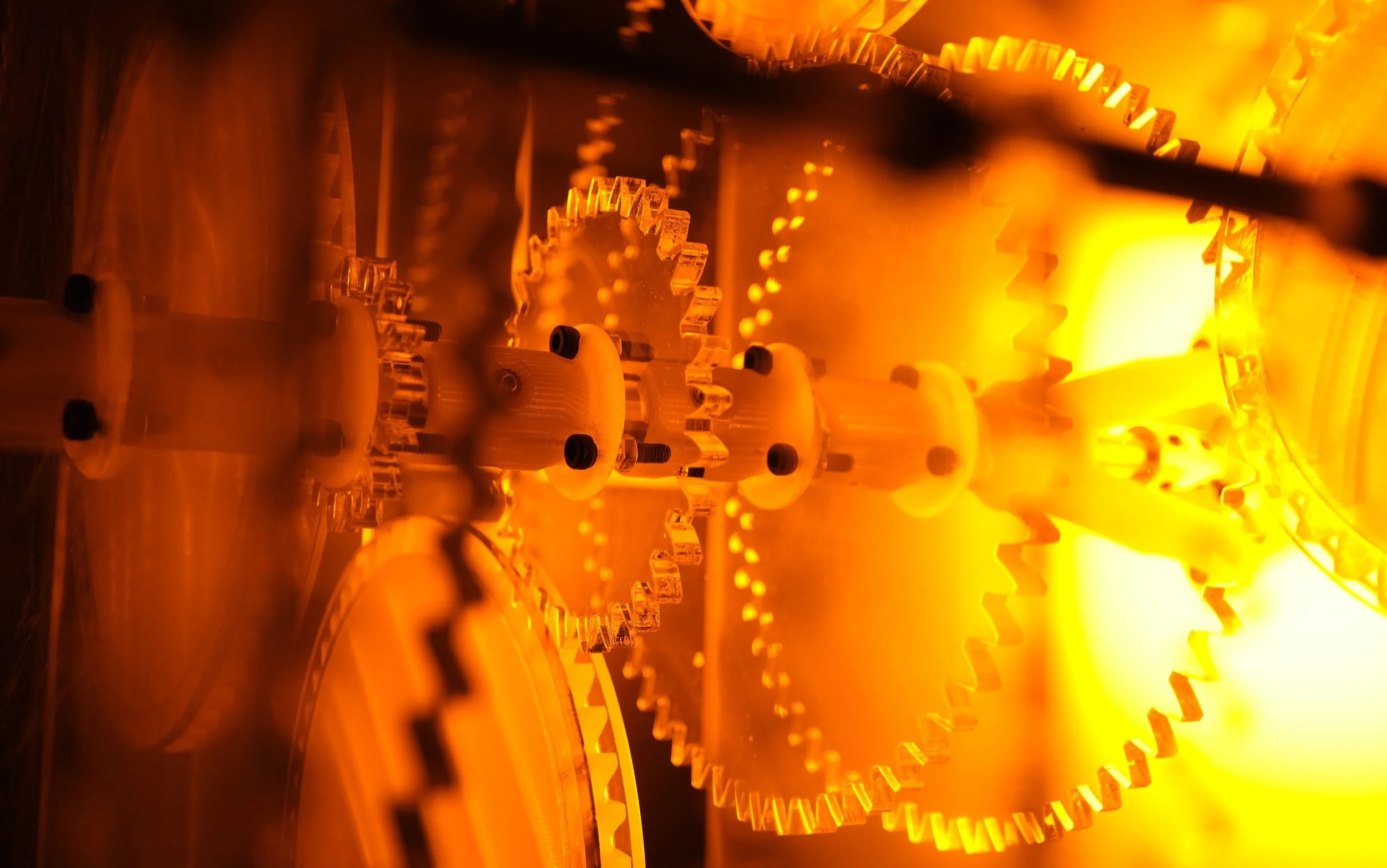
The shaft is the core of the kinetics, so I drew the assembly diagram first (with the first iteration of the flange), then custom-designed and printed several revisions of the sun-gear flange: from a plug-and-fit scheme with soft washers to a simpler screw mount, using the flange length to close the gap between sun gears. All of it serves one purpose — precise assembly and better overall mechanical performance.
Transparent gears
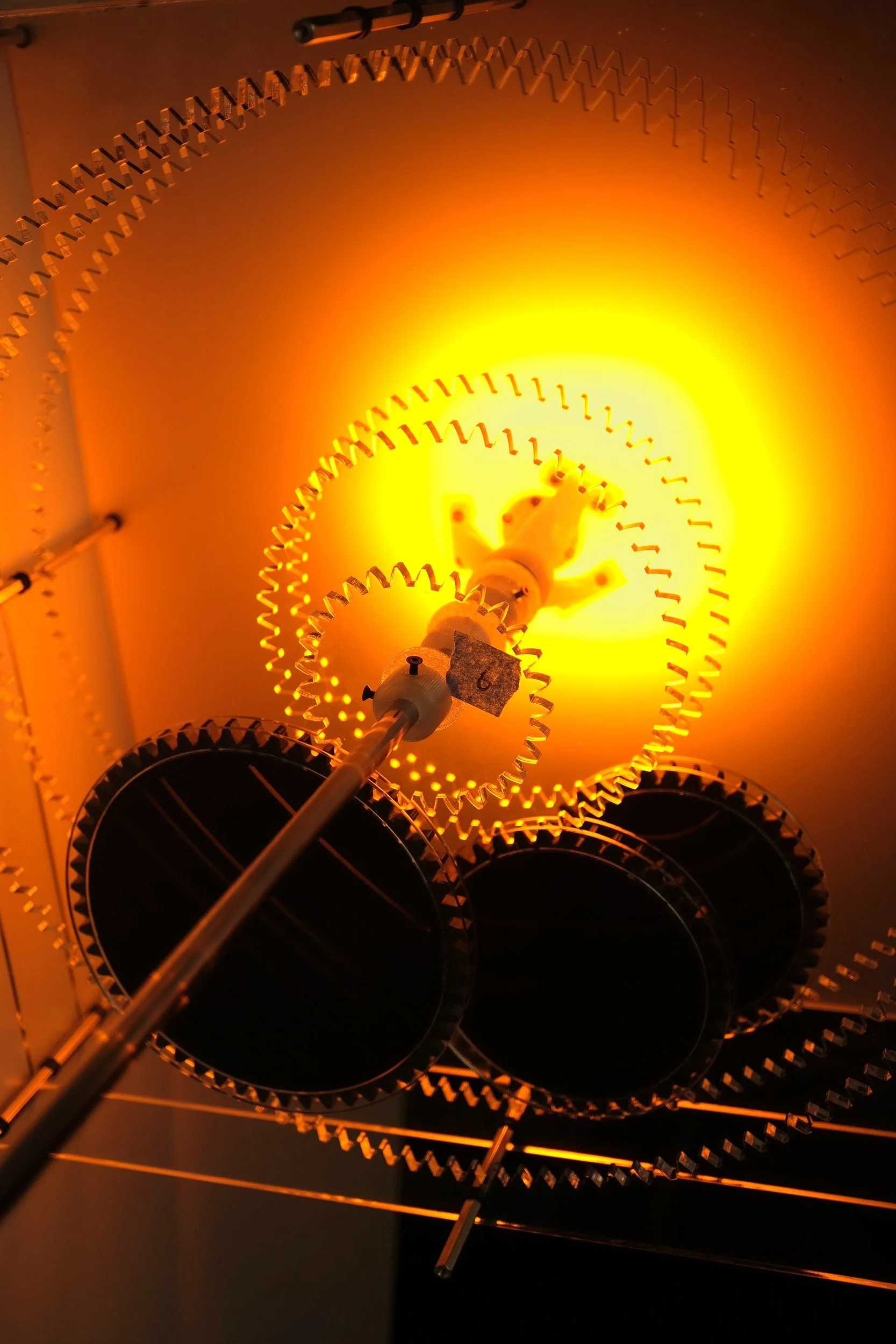
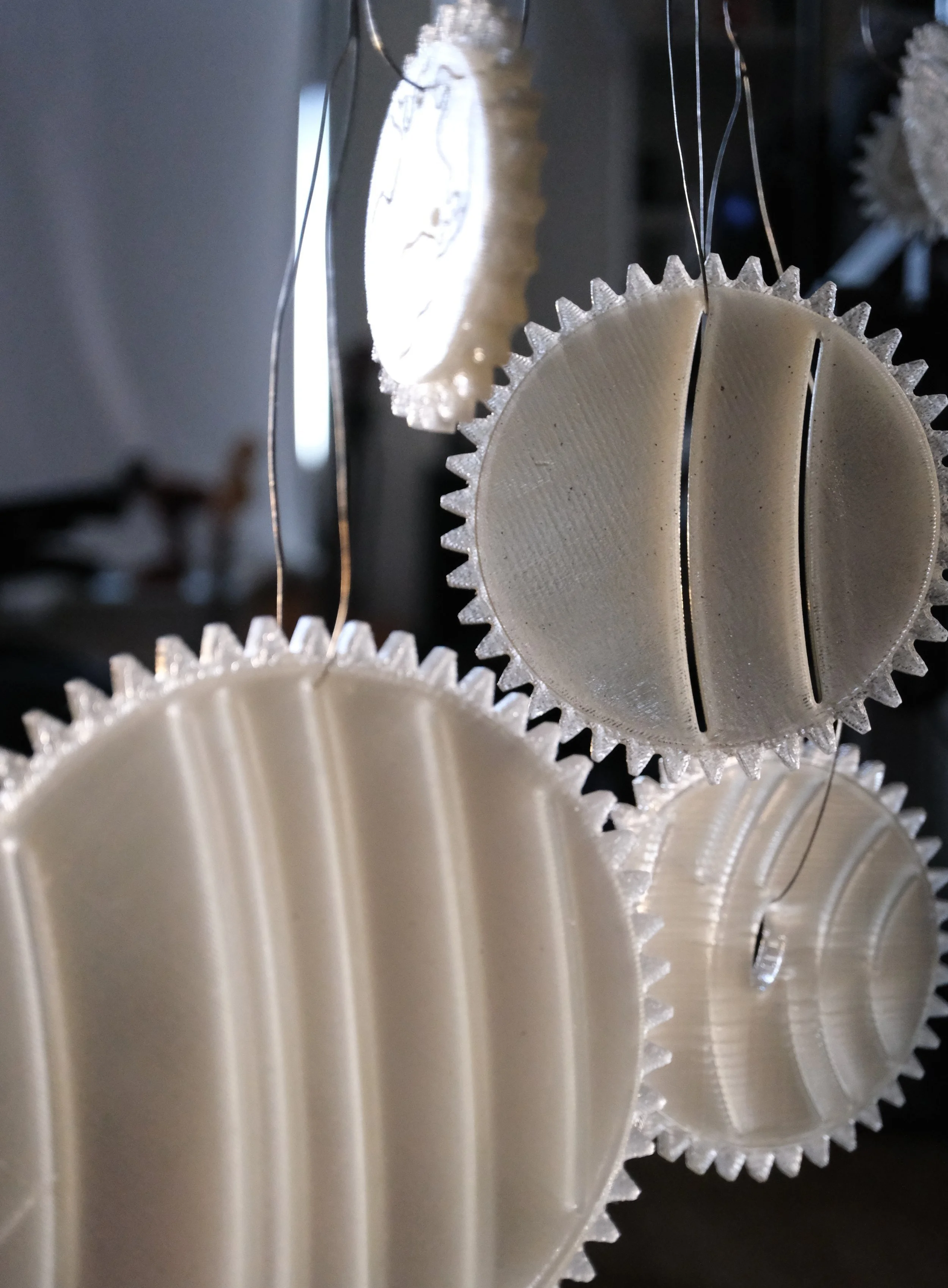
Testing settled the material question: the planet gears should be transparent. FDM printing cannot really do transparent, and my PVA trick never got clear enough, so we moved to resin — specifically the Polyjet, the larger-format option available to us.

Final prototype
The first full assembly — the “final prototype”, as we called it — was finished and documented while we waited for the Polyjet prints and material tests.
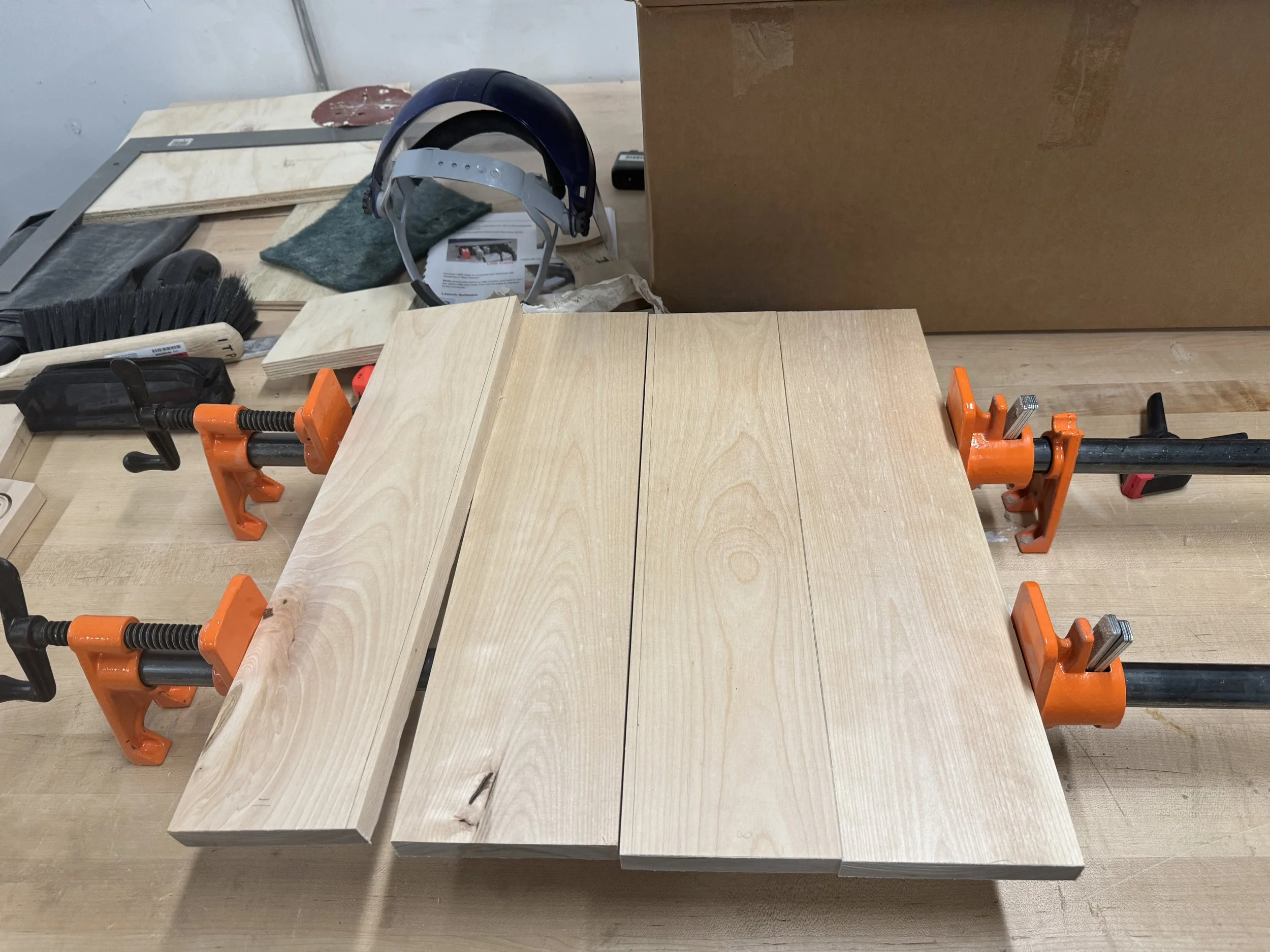
Enclosure
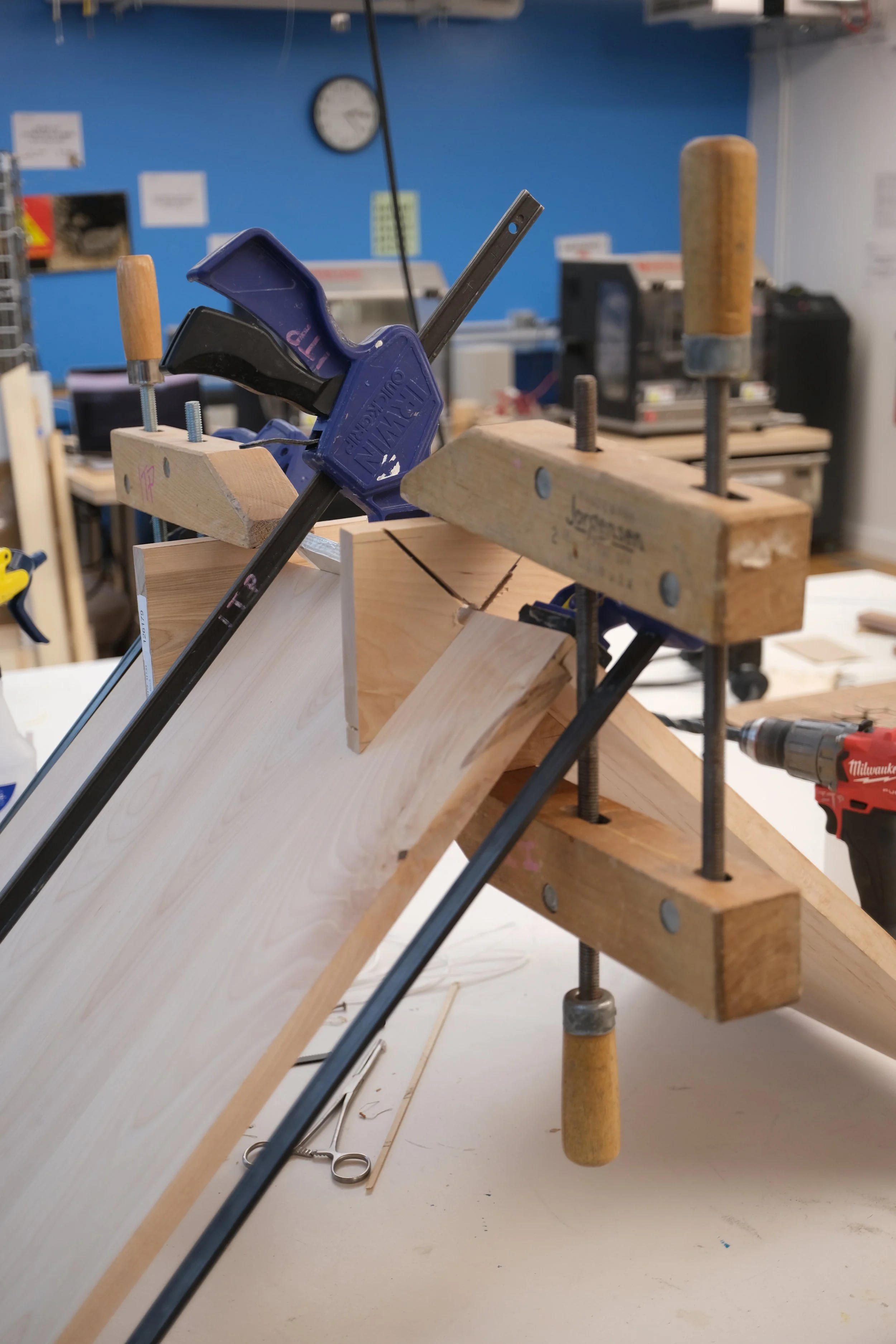
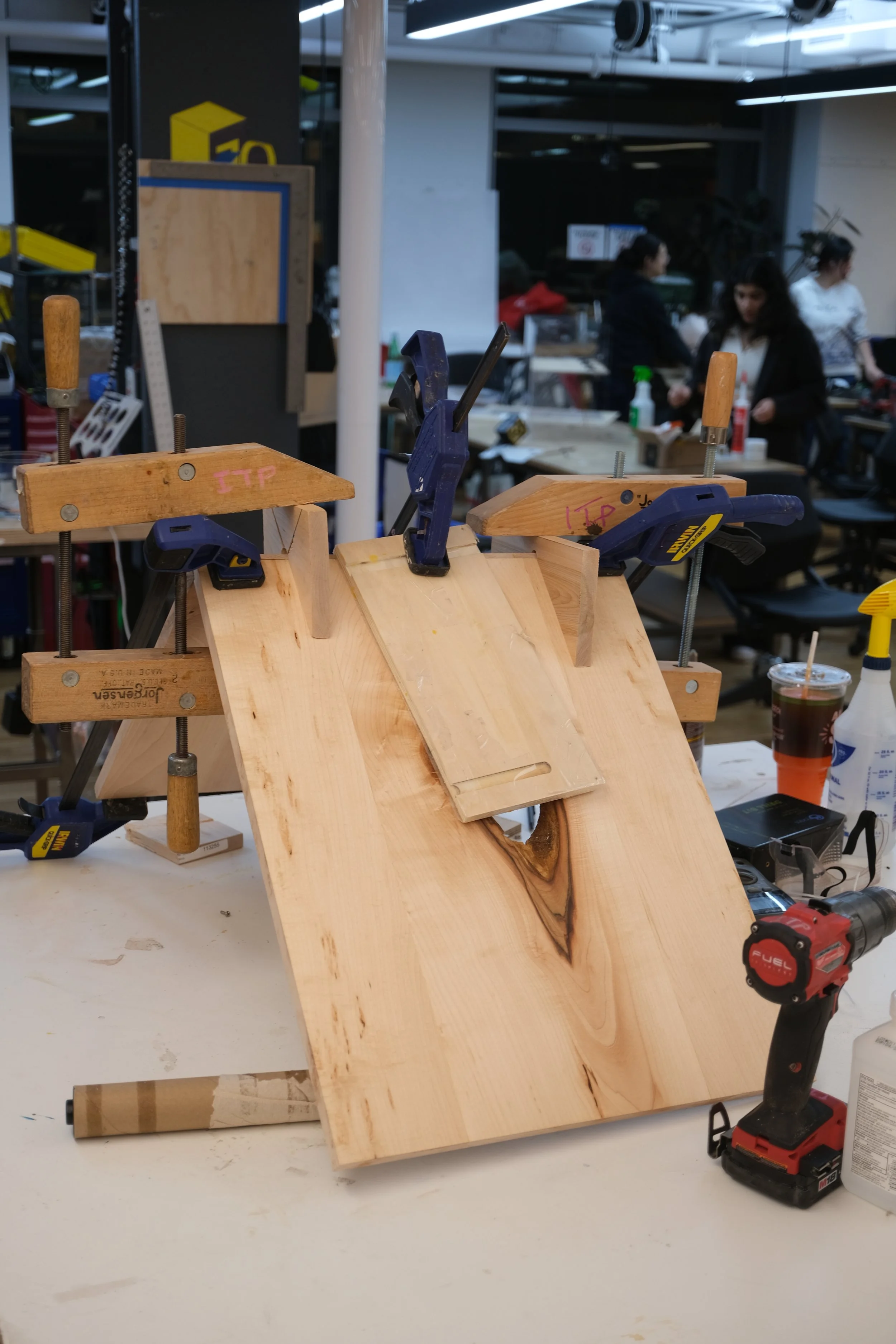
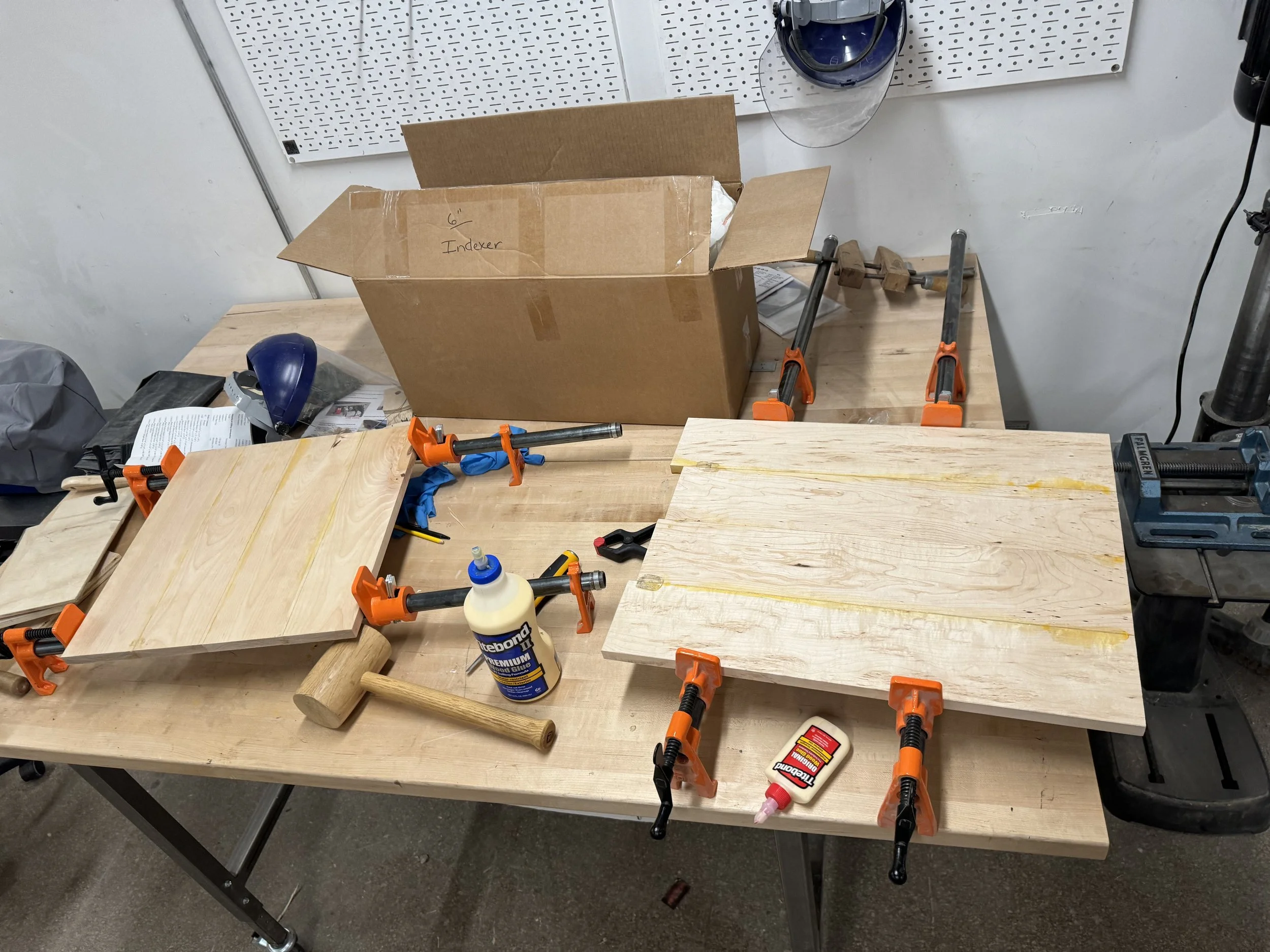
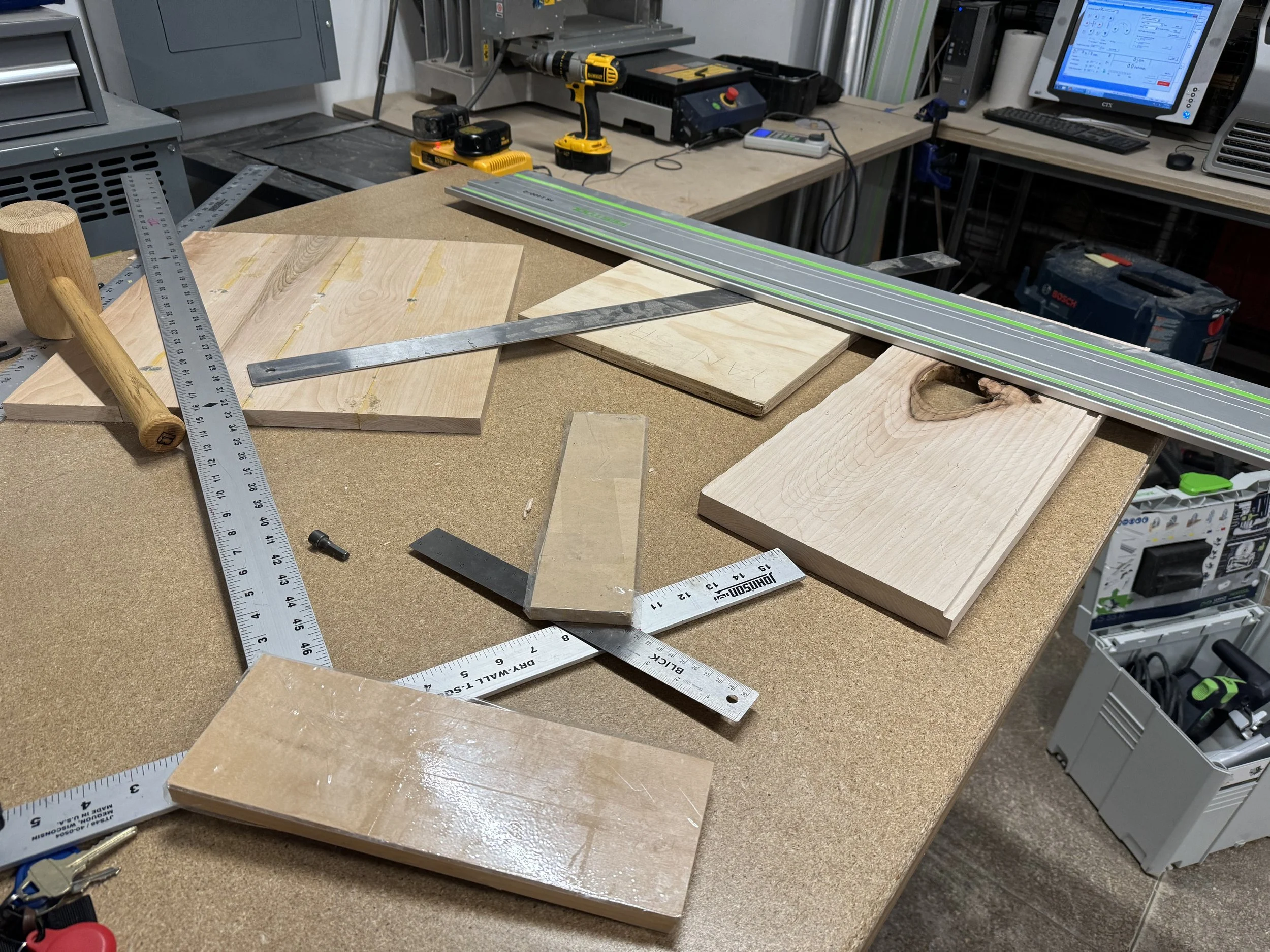
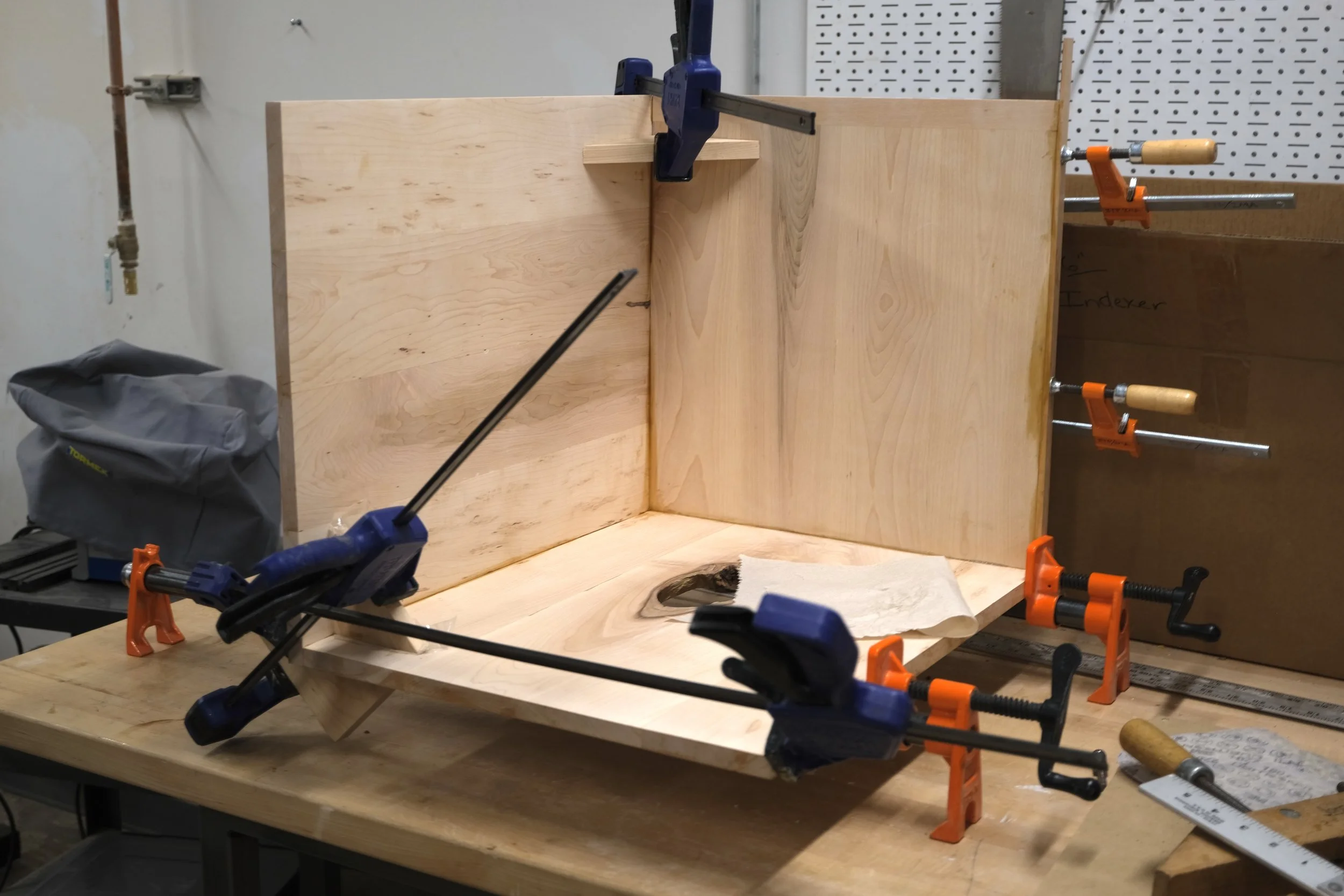
The enclosure came last. It took more time and craft than any reasonable plan would allow — and it brought back my passion for woodworking.